Tag: Xelis

  • Monero’s Privacy Premium: Why XMR Refuses to Fold While Bitcoin Sits in Crypto Winter

    Monero’s Privacy Premium: Why XMR Refuses to Fold While Bitcoin Sits in Crypto Winter

    This article is for informational purposes only and does not constitute financial advice. Cryptocurrency markets are highly volatile — do your own research before making investment decisions.

    Something odd has been happening in crypto markets through 2026, and most headlines are missing it. Bitcoin, the asset that’s supposed to set the tone for the entire market, has spent the year digging out of a hole. Privacy coins, the corner of the market regulators keep trying to bury, have spent the same year proving they don’t need Bitcoin’s permission to move.

    That divergence is the story. And Monero is writing most of it.

    Bitcoin’s 2026 Hangover

    Let’s get the numbers straight first, because “crypto winter” gets thrown around loosely. Bitcoin hit its all-time high of roughly $126,200 on October 6, 2025. By mid-August 2026, it’s trading in the mid-$60,000s — down close to half from that peak, with over a billion dollars in leveraged positions wiped out during the sharpest part of the slide[1]. The Crypto Fear & Greed Index touched a reading of 5 in early February 2026, a level lower than anything recorded during the Terra/Luna or FTX collapses[2].

    Bitcoin logo

    To be fair, this isn’t 2022. There’s been no cascading exchange failure, no Celsius-style contagion. Spot ETFs, regulated custody, and stablecoin infrastructure have kept the plumbing intact even as prices fell[3]. Some analysts, including Standard Chartered’s Geoffrey Kendrick, have already called a bottom and are framing the back half of 2026 as “crypto spring”[4]. Others expect Bitcoin to grind sideways in the low-to-mid $60,000s for a while longer before any real recovery attempt[5]. Either way, the plain fact stands: Bitcoin is trading roughly 49% below its own record, and the euphoria that defined late 2025 evaporated fast[1].

    Monero Didn’t Get the Memo

    While Bitcoin was falling out of its own record, Monero was setting new ones. XMR broke through $500 in January 2026 and pushed past $590 shortly after — a gain of roughly 230–330% from where it sat in mid-2024[6]. That rally happened during the same stretch that Bitcoin was cratering, which is the part worth sitting with. Monero wasn’t riding Bitcoin’s coattails. It was moving on its own thesis.

    That thesis is straightforward: as governments push harder on transaction surveillance frameworks and exchanges face growing pressure to delist non-compliant privacy tools, demand for assets that actually protect financial privacy hasn’t shrunk — it’s concentrated. Monero, built in 2014 around ring signatures and confidential transactions, is still the reference point for that category[6]. It’s not the flashiest chain in crypto. It doesn’t have smart contracts or a DeFi ecosystem. What it has is a decade of uninterrupted privacy-by-default, a tail emission that keeps miners incentivized indefinitely, and a mid-2026 network upgrade already in motion to shrink transaction sizes and adjust proof-of-work[7].

    None of this means Monero is risk-free. Liquidity is thin compared to Bitcoin — a $10 million sell order can move XMR’s price 5–10%, where the same order barely registers on BTC — and exchange delistings driven by EU MiCA enforcement remain the biggest structural threat to the asset[6][8]. Forecasts for the rest of 2026 vary wildly, from a bearish slide back toward $200 to a bullish push at $900, depending almost entirely on how regulators in the US and EU land on privacy-coin custody[9][8]. But even the conservative models put Monero’s base case comfortably above where it traded a year ago. That’s the privacy premium in action, and it’s why Monero keeps earning the label “alpha” in this category — it moved first, it moved biggest, and it’s still the coin every other privacy project gets measured against.

    The Field Behind Monero

    Monero isn’t alone anymore. Zcash, with its optional shielded transactions and zk-SNARK infrastructure, remains the other legacy name in the space. Firo, Pirate Chain, and a handful of smaller projects round out the older guard. But most of these chains are running privacy tech that’s a decade old at this point, built before homomorphic encryption and modern zero-knowledge systems became practical at scale. The next real technical leap isn’t coming from a fork of an old codebase — it’s coming from projects built from scratch around newer cryptography.

    That’s where Xelis comes in.

    Xelis: The BlockDAG Challenger Worth Watching

    Xelis (XEL) launched its mainnet on April 20, 2024, and it’s built almost nothing like Monero under the hood. Where Monero relies on ring signatures and stealth addresses, Xelis uses homomorphic encryption through a Twisted ElGamal cryptosystem on the Ristretto25519 curve — meaning balances and transferred amounts stay encrypted even while the network verifies them, without ever needing to decrypt the data to confirm a transaction is valid[10][11]. It’s genuinely different math than what Monero or Zcash run, and it’s the kind of cryptography that was barely practical for a live blockchain a few years ago.

    Xelis logo

    The structural difference matters just as much. Xelis isn’t a linear blockchain — it’s a BlockDAG, meaning multiple blocks can be produced and confirmed in parallel instead of competing for a single spot on one chain. That design is aimed squarely at Bitcoin and Monero’s shared weak point: throughput and orphaned-block waste. Xelis targets 5-second block times, backs it with a Kalman-filter difficulty adjustment for instant, smooth retargeting, and keeps mining egalitarian so ordinary CPUs and GPUs can still participate instead of ceding the network to specialized hardware[11][12].

    Xelis also ships with smart contracts out of the box, via its own XVM virtual machine and a purpose-built language called Silex[12][13] — something Monero has never had and has no roadmap to add. That opens the door to confidential DeFi: private swaps, private lending, encrypted on-chain applications, all running on a chain that was engineered for privacy from the genesis block rather than bolting it on later.

    The compliance angle is where Xelis gets genuinely interesting for a market that’s watching regulators tighten the noose on privacy tools. Its architecture includes multi-signature wallet support with dedicated viewing keys — a design that allows an account holder to selectively prove balances or share visibility without exposing the underlying private keys[12]. That’s a meaningfully different posture than “fully opaque by default,” and it’s the kind of feature that could let Xelis navigate exchange listing requirements and regulatory scrutiny in ways older privacy coins have struggled with. Whether that flexibility ends up being enough to satisfy regulators long-term is still an open question — the project is young, and MiCA-style frameworks are still being tested against far bigger names than Xelis. But the intent behind the design is clear: privacy that can still be selectively audited beats privacy that can only be banned outright.

    Is Xelis a Monero killer today? No — it’s a fraction of Monero’s size, liquidity, and track record, and newer chains carry the execution and security risk that comes with unproven infrastructure. But as a technical statement about where private, scalable, compliant-by-design blockchains could go next, Xelis is one of the more legitimately interesting builds in the space right now. It’s fresh tech attacking an old problem from a different angle, and it’s worth watching closely as it matures.

    The Bottom Line

    Bitcoin’s 2026 drawdown says something about speculative capital and macro sentiment. Monero’s resilience through that same drawdown says something different: that demand for financial privacy isn’t a trend that rides Bitcoin’s cycle — it’s a structural need that grows precisely when surveillance pressure grows. Monero is still the alpha in that category, with the track record, liquidity, and brand recognition to prove it. But the technology stack behind privacy coins is evolving fast, and projects like Xelis, with BlockDAG scalability, homomorphic encryption, and built-in compliance flexibility, represent where the next generation of this category is headed.

    Privacy isn’t folding. It’s diversifying.


    Footnotes

    [1]: Bitcoin peaked at $126,198.07 on October 6, 2025, and traded near $64,000–$65,000 through early-to-mid August 2026, a decline of roughly 49% from its all-time high, with over $1.8 billion in liquidations recorded during the sharpest leg of the sell-off. Sources: TheStreet Crypto, Fortune, Intellectia.ai.

    [2]: The Crypto Fear & Greed Index fell to a reading of 5 on February 6, 2026 — its lowest recorded level, below the readings seen during the June 2022 Terra/Luna collapse and the November 2022 FTX collapse. Source: Backpack Exchange Learn.

    [3]: Unlike 2022’s cascading failures (Terra/Luna, Three Arrows Capital, Celsius, Voyager, FTX), no major exchange or protocol has collapsed in the 2026 downturn; spot Bitcoin ETFs, regulated custody, and stablecoin frameworks including the 2025 GENIUS Act have provided structural support. Source: Backpack Exchange Learn.

    [4]: Standard Chartered analyst Geoffrey Kendrick called a cycle low near $59,000 in June 2026, describing the shift as the end of crypto winter and the start of “crypto spring.” Source: CoinDesk.

    [5]: As of mid-August 2026, Bitcoin traded in a range roughly between $62,500 and $70,000, below key moving averages, with analysts citing high interest rates and reduced ETF inflows as ongoing headwinds. Sources: Phemex, StealthEX.

    [6]: Monero rose from roughly $150–$180 in mid-2024 to over $590 in early 2026, a gain of 230–330%, driven by regulatory surveillance debates in the US and EU and rising demand for financial privacy tools. Source: EarnPark.

    [7]: Monero has a scheduled mid-2026 network upgrade including a proof-of-work change and reduced transaction sizes, alongside expanding privacy tooling and atomic swap utility. Source: CryptoRank.io.

    [8]: EU MiCA regulation, fully implemented by December 2025, and ongoing exchange delistings represent the largest structural risk to Monero’s liquidity and price; 2026 forecasts range from below $200 in a bear case to roughly $900 in a bull case. Sources: Coincub, KuCoin.

    [9]: XMR price forecasts for 2026 vary significantly by source, with some models projecting a decline toward $130–$200 and others projecting a range of $400–$600 in a 2026–2027 cycle. Sources: CoinPedia, CryptoRank.io.

    [10]: Xelis uses homomorphic encryption via a Twisted ElGamal cryptosystem built on the Ristretto25519 elliptic curve, allowing transaction amounts and balances to remain encrypted while still being verified on-chain. Source: Xelis Whitepaper (whitepaper.xelis.io).

    [11]: Xelis runs on a BlockDAG architecture designed to reduce orphaned block rates and improve scalability, combined with an egalitarian proof-of-work algorithm (xelis-hash) usable by CPUs and GPUs, and a Kalman-filter-based difficulty adjustment for smooth, instant retargeting. Source: Xelis GitHub / xelis-blockchain README.

    [12]: Xelis mainnet launched April 20, 2024, with a 5-second target block time, native smart contract support via the XVM virtual machine and the Silex programming language, and multi-signature wallet functionality including dedicated viewing keys for selective balance visibility. Sources: Xelis Docs (docs.xelis.io), Xelis.io Roadmap.

    [13]: Xelis smart contracts are executed in a sandboxed environment (xelis-vm), enabling decentralized application development directly on the network. Source: Xelis GitHub / xelis-blockchain README.


  • Beyond Blockchain: Understanding BlockDAG and the Next Generation of Cryptocurrencies

    Beyond Blockchain: Understanding BlockDAG and the Next Generation of Cryptocurrencies

    Introduction

    Bitcoin’s blockchain revolutionized digital currency by solving the double-spending problem without central authority [1]. Yet blockchain’s linear architecture imposes fundamental limitations: slow transaction speeds, poor scalability, and limited throughput. As cryptocurrency adoption grows, these constraints become increasingly problematic. Enter BlockDAG (Directed Acyclic Graph)—a structural innovation that maintains blockchain’s security guarantees while dramatically improving performance. Two projects exemplify this evolution: Kaspa, often called “Bitcoin of BlockDAG,” and Xelis, which combines the privacy of Monero with the programmability of Ethereum.

    The Blockchain Bottleneck

    Traditional blockchains like Bitcoin operate as linear chains where blocks are added sequentially, one at a time [2]. Bitcoin’s architecture processes approximately 7 transactions per second (TPS), with blocks generated roughly every 10 minutes [3]. Ethereum improved this to about 15-30 TPS, but this remains orders of magnitude slower than centralized payment systems like Visa, which handles thousands of transactions per second [4].

    This limitation is not accidental but structural. Blockchain’s security derives from consensus—nodes must agree on transaction order [5]. The linear chain ensures order but creates a bottleneck: only one miner can add the next block, and all others’ work becomes orphaned. This “race condition” wastes computational power and limits throughput.

    Attempts to increase blockchain speed face the “blockchain trilemma”—the apparent impossibility of simultaneously optimizing for decentralization, security, and scalability [6]. Increasing block size or reducing block time improves throughput but increases centralization risk as only powerful nodes can keep up. Bitcoin’s conservative design prioritizes decentralization and security over speed.

    Directed Acyclic Graphs: A Structural Solution

    BlockDAG replaces the linear chain with a directed acyclic graph—a mathematical structure where blocks can reference multiple parent blocks simultaneously [7]. Instead of a single chain, BlockDAG creates a lattice where blocks form a web of interconnected references, all pointing forward in time (hence “directed”) without circular loops (hence “acyclic”) [8].

    This structure eliminates the winner-take-all race of traditional mining. Multiple miners can produce valid blocks simultaneously, and all blocks can be included in the ledger [9]. The system maintains security through consensus algorithms that determine transaction order across this parallel structure.

    The DAG approach is not entirely new—IOTA pioneered it with the Tangle in 2015 [10]. However, early DAG implementations faced their own challenges, including centralization concerns and vulnerability to attacks at low network activity [11]. BlockDAG represents a refined iteration that maintains the proven security properties of blockchain while achieving the parallelization benefits of DAG structures.

    Kaspa: The Bitcoin of BlockDAG

    Kaspa, launched in November 2021, implements the GHOSTDAG protocol—a consensus mechanism specifically designed for BlockDAG architectures [12]. GHOSTDAG extends Bitcoin’s longest-chain rule to DAG structures, selecting the block with the most cumulative proof-of-work in its past rather than simply the longest chain [13].

    Kaspa logo
    Kaspa logo (Source: https://kaspa.org/media-kit/)

    The results are dramatic. Kaspa achieves approximately 1 block per second—600 times faster than Bitcoin [14]. With current implementation, this translates to hundreds of transactions per second, with potential for further scaling. Critically, this speed does not sacrifice decentralization; Kaspa maintains a proof-of-work consensus similar to Bitcoin, meaning anyone with computational resources can participate in mining [15].

    Kaspa’s economic model mirrors Bitcoin’s: a capped supply (28.7 billion coins, with emission rate halving annually), proof-of-work mining, and no pre-mine or developer allocation [16]. This alignment has earned it the moniker “Bitcoin of BlockDAG”—maintaining Bitcoin’s philosophical principles while solving its scalability limitations.

    The protocol’s instant confirmation feature addresses another blockchain weakness. Traditional blockchains require waiting for multiple confirmations to ensure transaction finality, a process taking minutes to hours [17]. Kaspa’s DAG structure allows near-instant confirmation while maintaining security equivalent to multiple blockchain confirmations [18].

    Xelis: Privacy and Programmability in BlockDAG

    Where Kaspa focuses on payment efficiency, Xelis tackles two additional frontiers: privacy and smart contracts [19]. Launched in 2024, Xelis implements a BlockDAG architecture with homomorphic encryption—a cryptographic technique allowing computations on encrypted data without decryption [20].

    Xelis logo
    Xelis logo (Source: https://github.com/xelis-project/xelis-assets)

    This approach addresses a fundamental tension in cryptocurrency. Bitcoin’s blockchain is transparent—all transactions are publicly visible [21]. While addresses are pseudonymous, blockchain analysis can often link addresses to real identities [22]. Monero solved this with ring signatures, stealth addresses, and confidential transactions, creating genuine financial privacy [23]. However, Monero lacks programmability; it cannot execute smart contracts like Ethereum [24].

    Ethereum pioneered programmable blockchain through smart contracts—self-executing code stored on the blockchain [25]. This enabled decentralized applications (dApps), decentralized finance (DeFi), and non-fungible tokens (NFTs) [26]. However, Ethereum transactions are fully transparent, and the network’s complexity creates security vulnerabilities [27].

    Xelis combines these capabilities through homomorphic encryption. Transactions are fully private by default—amounts, sender, and receiver are cryptographically shielded [28]. Simultaneously, the network supports smart contracts that can execute on encrypted data, enabling private programmable money [29]. The BlockDAG architecture provides the scalability necessary for complex smart contract execution without Ethereum’s congestion and high fees.

    This fusion of features—Monero’s privacy plus Ethereum’s programmability, all on a scalable BlockDAG—represents a significant evolutionary step. Users gain the privacy necessary for fungible money while retaining the flexibility of programmable blockchain [30].

    Technical Trade-offs and Challenges

    BlockDAG architectures are not without complications. The parallel block structure increases network bandwidth requirements; nodes must process and store more data than in linear blockchains [31]. Consensus algorithms for DAGs are more complex than simple longest-chain rules, requiring more sophisticated implementation and security analysis [32].

    Kaspa addresses this through its proof-of-work mechanism, which inherits Bitcoin’s battle-tested security model. The GHOSTDAG consensus has undergone formal mathematical analysis demonstrating resistance to various attack vectors [33]. However, the protocol’s relative youth compared to Bitcoin means it has experienced less real-world stress testing.

    Xelis faces additional challenges from its privacy features. Homomorphic encryption is computationally intensive, potentially limiting transaction throughput compared to transparent systems [34]. The combination of DAG complexity with cryptographic privacy creates a larger attack surface that requires careful ongoing security analysis [35]. Additionally, privacy-focused cryptocurrencies face regulatory scrutiny in some jurisdictions, potentially affecting exchange listings and adoption [36].

    Both projects also face the challenge of network effects. Bitcoin’s decade-plus existence, massive hash rate, and widespread recognition create a formidable incumbent advantage [37]. New protocols must not only be technically superior but must also convince users, miners, and developers to migrate—a social challenge as significant as any technical one [38].

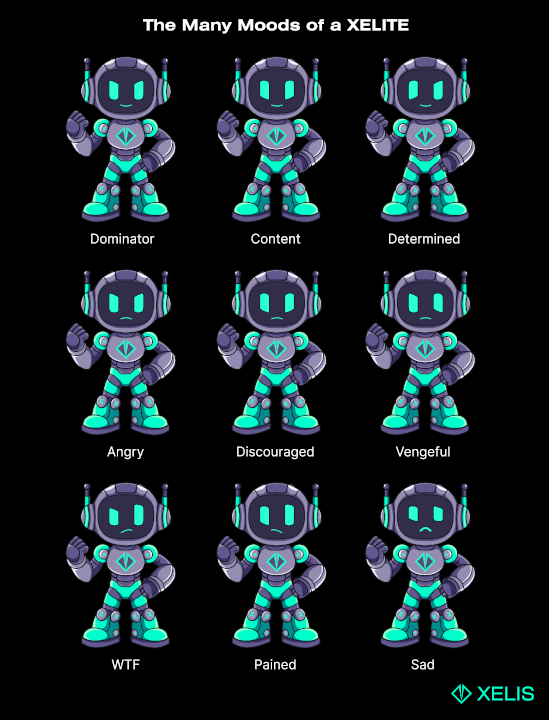
    Xelis mascot
    Xelite, Xelis mascot (Source: https://github.com/xelis-project/xelis-assets)

    Implications for Cryptocurrency Evolution

    The emergence of BlockDAG cryptocurrencies signals a maturing of the field. Bitcoin proved that decentralized digital currency is possible. Ethereum demonstrated that blockchains can be programmable. Monero showed that privacy is achievable. Now, projects like Kaspa and Xelis integrate these advances while addressing scalability limitations.

    This matters particularly for use cases requiring high throughput. Micropayments—small-value transactions like content tips or pay-per-use services—are economically infeasible on Bitcoin due to transaction fees [39]. Point-of-sale payments require instant confirmation and high throughput [40]. Decentralized finance applications need programmability, privacy, and scalability [41]. BlockDAG architectures make these applications practical.

    For populations in developing economies or under authoritarian regimes, these improvements are not merely conveniences. High transaction fees and slow confirmation times make Bitcoin impractical for small daily transactions—the very use case most important for the unbanked [42]. Privacy protections become critical when financial surveillance is a tool of political repression [43]. Programmable money enables decentralized alternatives to traditional financial services without requiring trust in institutions [44].

    Adoption and Network Effects

    The success of Kaspa and Xelis will ultimately depend not just on technical merit but on ecosystem development. Kaspa has seen growing mining adoption, with hash rate steadily increasing since launch [45]. Exchange listings have expanded, and developer activity continues building wallet software, explorers, and infrastructure tools [46].

    Xelis, being newer, faces a longer road to adoption. Its combination of features is technically impressive, but each added complexity—DAG, privacy, smart contracts—increases the difficulty of security auditing and the risk of undiscovered vulnerabilities [47]. The project will need time to prove its security properties in real-world conditions.

    Both projects benefit from being open-source, allowing independent verification and community contribution [48]. This transparency enables the trust-minimized systems that make cryptocurrency valuable. However, open-source development also means anyone can fork the code, creating potential fragmentation if communities disagree on protocol direction [49].

    Conclusion: Evolutionary Steps Forward

    Kaspa and Xelis represent not revolutionary replacements for Bitcoin but evolutionary refinements addressing known limitations. Kaspa demonstrates that blockchain’s security model can be preserved while achieving dramatically better scalability through DAG structures. Xelis shows that privacy and programmability can coexist without sacrificing performance.

    Neither project will make Bitcoin obsolete. Bitcoin’s network effects, security through age, and philosophical position as “digital gold” remain compelling [50]. But for applications requiring fast payments, complex smart contracts, or strong privacy, these newer protocols offer superior technical solutions.

    The cryptocurrency ecosystem benefits from this diversity. Different use cases favor different trade-offs between speed, privacy, programmability, and security [51]. Just as the internet runs on multiple protocols—HTTP for web, SMTP for email, FTP for files—cryptocurrency may evolve into a multi-protocol ecosystem where different ledgers serve different functions [52].

    For users seeking financial sovereignty, these technologies matter because they expand possibilities. A sanctions-hit nation might prioritize privacy (Xelis). A remittance corridor might prioritize speed and low fees (Kaspa). A savings vehicle might prioritize security and stability (Bitcoin). The existence of multiple robust alternatives strengthens the entire ecosystem against single points of failure—whether technical vulnerabilities or political attacks [53].

    BlockDAG represents one path forward for cryptocurrency scaling. Whether Kaspa and Xelis specifically succeed matters less than the proof that alternatives to linear blockchain can work at scale while maintaining security. This knowledge enables future innovations and ensures that cryptocurrency can continue evolving to meet real-world needs.


    References

    [1] Nakamoto, Satoshi (2008). “Bitcoin: A Peer-to-Peer Electronic Cash System.” bitcoin.org/bitcoin.pdf
    [2] Antonopoulos, Andreas M. (2017). Mastering Bitcoin. O’Reilly Media.
    [3] Bitcoin.org. “How Bitcoin Works.” bitcoin.org/en/how-it-works
    [4] Buterin, Vitalik (2014). “Ethereum White Paper.” ethereum.org/whitepaper
    [5] Narayanan, Arvind, et al. (2016). Bitcoin and Cryptocurrency Technologies. Princeton University Press.
    [6] Buterin, Vitalik (2017). “The Blockchain Trilemma.” GitHub.
    [7] Sompolinsky, Yonatan & Zohar, Aviv (2015). “Secure High-Rate Transaction Processing in Bitcoin.” Financial Cryptography 2015.
    [8] Popov, Serguei (2018). “The Tangle.” IOTA Foundation.
    [9] Sompolinsky, Y., Lewenberg, Y., & Zohar, A. (2016). “SPECTRE: A Fast and Scalable Cryptocurrency Protocol.” IACR Cryptology ePrint Archive.
    [10] Popov (2018). “The Tangle.”
    [11] Kusmierz, Bruno (2019). “Analysis of the IOTA Tangle.” IOTA Foundation.
    [12] Kaspa Documentation (2022). “GHOSTDAG Protocol.” kaspa.org/docs
    [13] Sompolinsky & Zohar (2015). “Secure High-Rate Transaction Processing.”
    [14] Kaspa.org. “Kaspa Technical Specifications.” kaspa.org
    [15] Kaspa Mining Guide (2023). kaspa.org/mining
    [16] Kaspa Emission Schedule (2022). kaspa.org/emission
    [17] Karame, Ghassan O., et al. (2012). “Double-Spending Fast Payments in Bitcoin.” ACM CCS 2012.
    [18] Kaspa Documentation (2022). “Instant Confirmations.”
    [19] Xelis White Paper (2024). xelis.io/whitepaper
    [20] Gentry, Craig (2009). “Fully Homomorphic Encryption Using Ideal Lattices.” STOC 2009.
    [21] Nakamoto (2008). Bitcoin whitepaper.
    [22] Reid, Fergal & Harrigan, Martin (2011). “An Analysis of Anonymity in the Bitcoin System.” Security and Privacy in Social Networks.
    [23] Van Saberhagen, Nicolas (2013). “CryptoNote v2.0.” cryptonote.org
    [24] Monero Project (2023). “What is Monero?” getmonero.org
    [25] Wood, Gavin (2014). “Ethereum: A Secure Decentralised Generalised Transaction Ledger.” ethereum.org/yellowpaper
    [26] Buterin (2014). Ethereum White Paper.
    [27] Atzei, Nicola, et al. (2017). “A Survey of Attacks on Ethereum Smart Contracts.” POST 2017.
    [28] Xelis Documentation (2024). “Homomorphic Encryption in Xelis.” xelis.io/docs
    [29] Xelis White Paper (2024). “Smart Contracts on Encrypted Data.”
    [30] Xelis Technical Blog (2024). “Combining Privacy and Programmability.” xelis.io/blog
    [31] Li, Chenxing, et al. (2018). “Scaling Nakamoto Consensus to Thousands of Transactions per Second.” arXiv:1805.03870
    [32] Sompolinsky, et al. (2016). “SPECTRE Protocol.”
    [33] Kaspa Research Papers (2022). “GHOSTDAG Security Analysis.” kaspa.org/research
    [34] Gentry (2009). “Fully Homomorphic Encryption.”
    [35] Xelis Security Audit (2024). “Third-Party Security Review.” xelis.io/security
    [36] Financial Action Task Force (2023). “Virtual Assets and Virtual Asset Service Providers.” fatf-gafi.org
    [37] Cambridge Centre for Alternative Finance (2023). “Cambridge Bitcoin Electricity Consumption Index.” cbeci.org
    [38] Gandal, Neil & Halaburda, Hanna (2014). “Competition in the Cryptocurrency Market.” Bank of Canada Working Paper.
    [39] Lightning Network White Paper (2016). “The Bitcoin Lightning Network.” lightning.network/lightning-network-paper.pdf
    [40] Nakamoto (2008). Bitcoin whitepaper, Section 8.
    [41] Schär, Fabian (2021). “Decentralized Finance: On Blockchain- and Smart Contract-Based Financial Markets.” Federal Reserve Bank of St. Louis Review.
    [42] World Bank (2021). “Global Findex Database.”
    [43] Kshetri, Nir & Voas, Jeffrey (2018). “Blockchain-Enabled E-Voting.” IEEE Software.
    [44] Tapscott & Tapscott (2016). Blockchain Revolution.
    [45] MiningPoolStats (2024). “Kaspa Network Hash Rate.” miningpoolstats.stream/kaspa
    [46] Kaspa GitHub (2024). github.com/kaspanet
    [47] Xelis Roadmap (2024). “Development and Audit Timeline.” xelis.io/roadmap
    [48] Open Source Initiative. “The Open Source Definition.” opensource.org/osd
    [49] De Filippi, Primavera & Loveluck, Benjamin (2016). “The Invisible Politics of Bitcoin.” Internet Policy Review.
    [50] Ammous, Saifedean (2018). The Bitcoin Standard. Wiley.
    [51] Narayanan, et al. (2016). Bitcoin and Cryptocurrency Technologies.
    [52] Tasca, Paolo & Tessone, Claudio J. (2019). “A Taxonomy of Blockchain Technologies.” Journal of The British Blockchain Association.
    [53] Böhme, Rainer, et al. (2015). “Bitcoin: Economics, Technology, and Governance.” Journal of Economic Perspectives.