
Tag: empowerment

  • Beyond Blockchain: Understanding BlockDAG and the Next Generation of Cryptocurrencies

    Beyond Blockchain: Understanding BlockDAG and the Next Generation of Cryptocurrencies

    Introduction

    Bitcoin’s blockchain revolutionized digital currency by solving the double-spending problem without central authority [1]. Yet blockchain’s linear architecture imposes fundamental limitations: slow transaction speeds, poor scalability, and limited throughput. As cryptocurrency adoption grows, these constraints become increasingly problematic. Enter BlockDAG (Directed Acyclic Graph)—a structural innovation that maintains blockchain’s security guarantees while dramatically improving performance. Two projects exemplify this evolution: Kaspa, often called “Bitcoin of BlockDAG,” and Xelis, which combines the privacy of Monero with the programmability of Ethereum.

    The Blockchain Bottleneck

    Traditional blockchains like Bitcoin operate as linear chains where blocks are added sequentially, one at a time [2]. Bitcoin’s architecture processes approximately 7 transactions per second (TPS), with blocks generated roughly every 10 minutes [3]. Ethereum improved this to about 15-30 TPS, but this remains orders of magnitude slower than centralized payment systems like Visa, which handles thousands of transactions per second [4].

    This limitation is not accidental but structural. Blockchain’s security derives from consensus—nodes must agree on transaction order [5]. The linear chain ensures order but creates a bottleneck: only one miner can add the next block, and all others’ work becomes orphaned. This “race condition” wastes computational power and limits throughput.

    Attempts to increase blockchain speed face the “blockchain trilemma”—the apparent impossibility of simultaneously optimizing for decentralization, security, and scalability [6]. Increasing block size or reducing block time improves throughput but increases centralization risk as only powerful nodes can keep up. Bitcoin’s conservative design prioritizes decentralization and security over speed.

    Directed Acyclic Graphs: A Structural Solution

    BlockDAG replaces the linear chain with a directed acyclic graph—a mathematical structure where blocks can reference multiple parent blocks simultaneously [7]. Instead of a single chain, BlockDAG creates a lattice where blocks form a web of interconnected references, all pointing forward in time (hence “directed”) without circular loops (hence “acyclic”) [8].

    This structure eliminates the winner-take-all race of traditional mining. Multiple miners can produce valid blocks simultaneously, and all blocks can be included in the ledger [9]. The system maintains security through consensus algorithms that determine transaction order across this parallel structure.

    The DAG approach is not entirely new—IOTA pioneered it with the Tangle in 2015 [10]. However, early DAG implementations faced their own challenges, including centralization concerns and vulnerability to attacks at low network activity [11]. BlockDAG represents a refined iteration that maintains the proven security properties of blockchain while achieving the parallelization benefits of DAG structures.

    Kaspa: The Bitcoin of BlockDAG

    Kaspa, launched in November 2021, implements the GHOSTDAG protocol—a consensus mechanism specifically designed for BlockDAG architectures [12]. GHOSTDAG extends Bitcoin’s longest-chain rule to DAG structures, selecting the block with the most cumulative proof-of-work in its past rather than simply the longest chain [13].

    Kaspa logo
    Kaspa logo (Source: https://kaspa.org/media-kit/)

    The results are dramatic. Kaspa achieves approximately 1 block per second—600 times faster than Bitcoin [14]. With current implementation, this translates to hundreds of transactions per second, with potential for further scaling. Critically, this speed does not sacrifice decentralization; Kaspa maintains a proof-of-work consensus similar to Bitcoin, meaning anyone with computational resources can participate in mining [15].

    Kaspa’s economic model mirrors Bitcoin’s: a capped supply (28.7 billion coins, with emission rate halving annually), proof-of-work mining, and no pre-mine or developer allocation [16]. This alignment has earned it the moniker “Bitcoin of BlockDAG”—maintaining Bitcoin’s philosophical principles while solving its scalability limitations.

    The protocol’s instant confirmation feature addresses another blockchain weakness. Traditional blockchains require waiting for multiple confirmations to ensure transaction finality, a process taking minutes to hours [17]. Kaspa’s DAG structure allows near-instant confirmation while maintaining security equivalent to multiple blockchain confirmations [18].

    Xelis: Privacy and Programmability in BlockDAG

    Where Kaspa focuses on payment efficiency, Xelis tackles two additional frontiers: privacy and smart contracts [19]. Launched in 2024, Xelis implements a BlockDAG architecture with homomorphic encryption—a cryptographic technique allowing computations on encrypted data without decryption [20].

    Xelis logo
    Xelis logo (Source: https://github.com/xelis-project/xelis-assets)

    This approach addresses a fundamental tension in cryptocurrency. Bitcoin’s blockchain is transparent—all transactions are publicly visible [21]. While addresses are pseudonymous, blockchain analysis can often link addresses to real identities [22]. Monero solved this with ring signatures, stealth addresses, and confidential transactions, creating genuine financial privacy [23]. However, Monero lacks programmability; it cannot execute smart contracts like Ethereum [24].

    Ethereum pioneered programmable blockchain through smart contracts—self-executing code stored on the blockchain [25]. This enabled decentralized applications (dApps), decentralized finance (DeFi), and non-fungible tokens (NFTs) [26]. However, Ethereum transactions are fully transparent, and the network’s complexity creates security vulnerabilities [27].

    Xelis combines these capabilities through homomorphic encryption. Transactions are fully private by default—amounts, sender, and receiver are cryptographically shielded [28]. Simultaneously, the network supports smart contracts that can execute on encrypted data, enabling private programmable money [29]. The BlockDAG architecture provides the scalability necessary for complex smart contract execution without Ethereum’s congestion and high fees.

    This fusion of features—Monero’s privacy plus Ethereum’s programmability, all on a scalable BlockDAG—represents a significant evolutionary step. Users gain the privacy necessary for fungible money while retaining the flexibility of programmable blockchain [30].

    Technical Trade-offs and Challenges

    BlockDAG architectures are not without complications. The parallel block structure increases network bandwidth requirements; nodes must process and store more data than in linear blockchains [31]. Consensus algorithms for DAGs are more complex than simple longest-chain rules, requiring more sophisticated implementation and security analysis [32].

    Kaspa addresses this through its proof-of-work mechanism, which inherits Bitcoin’s battle-tested security model. The GHOSTDAG consensus has undergone formal mathematical analysis demonstrating resistance to various attack vectors [33]. However, the protocol’s relative youth compared to Bitcoin means it has experienced less real-world stress testing.

    Xelis faces additional challenges from its privacy features. Homomorphic encryption is computationally intensive, potentially limiting transaction throughput compared to transparent systems [34]. The combination of DAG complexity with cryptographic privacy creates a larger attack surface that requires careful ongoing security analysis [35]. Additionally, privacy-focused cryptocurrencies face regulatory scrutiny in some jurisdictions, potentially affecting exchange listings and adoption [36].

    Both projects also face the challenge of network effects. Bitcoin’s decade-plus existence, massive hash rate, and widespread recognition create a formidable incumbent advantage [37]. New protocols must not only be technically superior but must also convince users, miners, and developers to migrate—a social challenge as significant as any technical one [38].
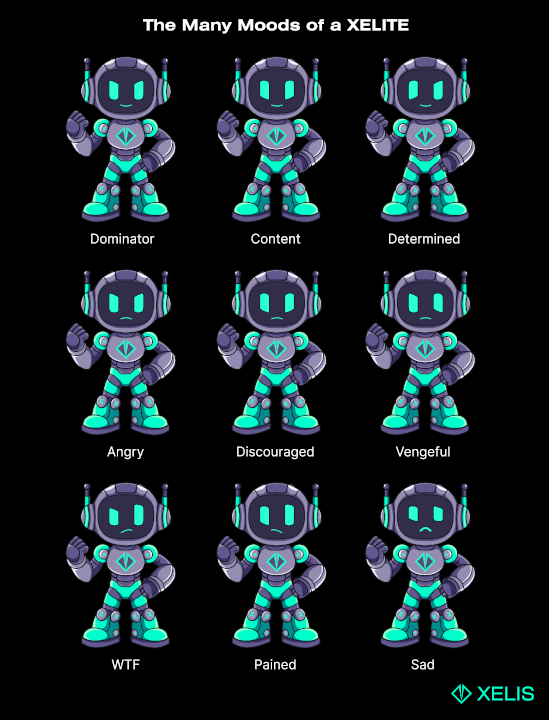
    Xelis mascot
    Xelite, Xelis mascot (Source: https://github.com/xelis-project/xelis-assets)

    Implications for Cryptocurrency Evolution

    The emergence of BlockDAG cryptocurrencies signals a maturing of the field. Bitcoin proved that decentralized digital currency is possible. Ethereum demonstrated that blockchains can be programmable. Monero showed that privacy is achievable. Now, projects like Kaspa and Xelis integrate these advances while addressing scalability limitations.

    This matters particularly for use cases requiring high throughput. Micropayments—small-value transactions like content tips or pay-per-use services—are economically infeasible on Bitcoin due to transaction fees [39]. Point-of-sale payments require instant confirmation and high throughput [40]. Decentralized finance applications need programmability, privacy, and scalability [41]. BlockDAG architectures make these applications practical.

    For populations in developing economies or under authoritarian regimes, these improvements are not merely conveniences. High transaction fees and slow confirmation times make Bitcoin impractical for small daily transactions—the very use case most important for the unbanked [42]. Privacy protections become critical when financial surveillance is a tool of political repression [43]. Programmable money enables decentralized alternatives to traditional financial services without requiring trust in institutions [44].

    Adoption and Network Effects

    The success of Kaspa and Xelis will ultimately depend not just on technical merit but on ecosystem development. Kaspa has seen growing mining adoption, with hash rate steadily increasing since launch [45]. Exchange listings have expanded, and developer activity continues building wallet software, explorers, and infrastructure tools [46].

    Xelis, being newer, faces a longer road to adoption. Its combination of features is technically impressive, but each added complexity—DAG, privacy, smart contracts—increases the difficulty of security auditing and the risk of undiscovered vulnerabilities [47]. The project will need time to prove its security properties in real-world conditions.

    Both projects benefit from being open-source, allowing independent verification and community contribution [48]. This transparency enables the trust-minimized systems that make cryptocurrency valuable. However, open-source development also means anyone can fork the code, creating potential fragmentation if communities disagree on protocol direction [49].

    Conclusion: Evolutionary Steps Forward

    Kaspa and Xelis represent not revolutionary replacements for Bitcoin but evolutionary refinements addressing known limitations. Kaspa demonstrates that blockchain’s security model can be preserved while achieving dramatically better scalability through DAG structures. Xelis shows that privacy and programmability can coexist without sacrificing performance.

    Neither project will make Bitcoin obsolete. Bitcoin’s network effects, security through age, and philosophical position as “digital gold” remain compelling [50]. But for applications requiring fast payments, complex smart contracts, or strong privacy, these newer protocols offer superior technical solutions.

    The cryptocurrency ecosystem benefits from this diversity. Different use cases favor different trade-offs between speed, privacy, programmability, and security [51]. Just as the internet runs on multiple protocols—HTTP for web, SMTP for email, FTP for files—cryptocurrency may evolve into a multi-protocol ecosystem where different ledgers serve different functions [52].

    For users seeking financial sovereignty, these technologies matter because they expand possibilities. A sanctions-hit nation might prioritize privacy (Xelis). A remittance corridor might prioritize speed and low fees (Kaspa). A savings vehicle might prioritize security and stability (Bitcoin). The existence of multiple robust alternatives strengthens the entire ecosystem against single points of failure—whether technical vulnerabilities or political attacks [53].

    BlockDAG represents one path forward for cryptocurrency scaling. Whether Kaspa and Xelis specifically succeed matters less than the proof that alternatives to linear blockchain can work at scale while maintaining security. This knowledge enables future innovations and ensures that cryptocurrency can continue evolving to meet real-world needs.


    References

    [1] Nakamoto, Satoshi (2008). “Bitcoin: A Peer-to-Peer Electronic Cash System.” bitcoin.org/bitcoin.pdf
    [2] Antonopoulos, Andreas M. (2017). Mastering Bitcoin. O’Reilly Media.
    [3] Bitcoin.org. “How Bitcoin Works.” bitcoin.org/en/how-it-works
    [4] Buterin, Vitalik (2014). “Ethereum White Paper.” ethereum.org/whitepaper
    [5] Narayanan, Arvind, et al. (2016). Bitcoin and Cryptocurrency Technologies. Princeton University Press.
    [6] Buterin, Vitalik (2017). “The Blockchain Trilemma.” GitHub.
    [7] Sompolinsky, Yonatan & Zohar, Aviv (2015). “Secure High-Rate Transaction Processing in Bitcoin.” Financial Cryptography 2015.
    [8] Popov, Serguei (2018). “The Tangle.” IOTA Foundation.
    [9] Sompolinsky, Y., Lewenberg, Y., & Zohar, A. (2016). “SPECTRE: A Fast and Scalable Cryptocurrency Protocol.” IACR Cryptology ePrint Archive.
    [10] Popov (2018). “The Tangle.”
    [11] Kusmierz, Bruno (2019). “Analysis of the IOTA Tangle.” IOTA Foundation.
    [12] Kaspa Documentation (2022). “GHOSTDAG Protocol.” kaspa.org/docs
    [13] Sompolinsky & Zohar (2015). “Secure High-Rate Transaction Processing.”
    [14] Kaspa.org. “Kaspa Technical Specifications.” kaspa.org
    [15] Kaspa Mining Guide (2023). kaspa.org/mining
    [16] Kaspa Emission Schedule (2022). kaspa.org/emission
    [17] Karame, Ghassan O., et al. (2012). “Double-Spending Fast Payments in Bitcoin.” ACM CCS 2012.
    [18] Kaspa Documentation (2022). “Instant Confirmations.”
    [19] Xelis White Paper (2024). xelis.io/whitepaper
    [20] Gentry, Craig (2009). “Fully Homomorphic Encryption Using Ideal Lattices.” STOC 2009.
    [21] Nakamoto (2008). Bitcoin whitepaper.
    [22] Reid, Fergal & Harrigan, Martin (2011). “An Analysis of Anonymity in the Bitcoin System.” Security and Privacy in Social Networks.
    [23] Van Saberhagen, Nicolas (2013). “CryptoNote v2.0.” cryptonote.org
    [24] Monero Project (2023). “What is Monero?” getmonero.org
    [25] Wood, Gavin (2014). “Ethereum: A Secure Decentralised Generalised Transaction Ledger.” ethereum.org/yellowpaper
    [26] Buterin (2014). Ethereum White Paper.
    [27] Atzei, Nicola, et al. (2017). “A Survey of Attacks on Ethereum Smart Contracts.” POST 2017.
    [28] Xelis Documentation (2024). “Homomorphic Encryption in Xelis.” xelis.io/docs
    [29] Xelis White Paper (2024). “Smart Contracts on Encrypted Data.”
    [30] Xelis Technical Blog (2024). “Combining Privacy and Programmability.” xelis.io/blog
    [31] Li, Chenxing, et al. (2018). “Scaling Nakamoto Consensus to Thousands of Transactions per Second.” arXiv:1805.03870
    [32] Sompolinsky, et al. (2016). “SPECTRE Protocol.”
    [33] Kaspa Research Papers (2022). “GHOSTDAG Security Analysis.” kaspa.org/research
    [34] Gentry (2009). “Fully Homomorphic Encryption.”
    [35] Xelis Security Audit (2024). “Third-Party Security Review.” xelis.io/security
    [36] Financial Action Task Force (2023). “Virtual Assets and Virtual Asset Service Providers.” fatf-gafi.org
    [37] Cambridge Centre for Alternative Finance (2023). “Cambridge Bitcoin Electricity Consumption Index.” cbeci.org
    [38] Gandal, Neil & Halaburda, Hanna (2014). “Competition in the Cryptocurrency Market.” Bank of Canada Working Paper.
    [39] Lightning Network White Paper (2016). “The Bitcoin Lightning Network.” lightning.network/lightning-network-paper.pdf
    [40] Nakamoto (2008). Bitcoin whitepaper, Section 8.
    [41] Schär, Fabian (2021). “Decentralized Finance: On Blockchain- and Smart Contract-Based Financial Markets.” Federal Reserve Bank of St. Louis Review.
    [42] World Bank (2021). “Global Findex Database.”
    [43] Kshetri, Nir & Voas, Jeffrey (2018). “Blockchain-Enabled E-Voting.” IEEE Software.
    [44] Tapscott & Tapscott (2016). Blockchain Revolution.
    [45] MiningPoolStats (2024). “Kaspa Network Hash Rate.” miningpoolstats.stream/kaspa
    [46] Kaspa GitHub (2024). github.com/kaspanet
    [47] Xelis Roadmap (2024). “Development and Audit Timeline.” xelis.io/roadmap
    [48] Open Source Initiative. “The Open Source Definition.” opensource.org/osd
    [49] De Filippi, Primavera & Loveluck, Benjamin (2016). “The Invisible Politics of Bitcoin.” Internet Policy Review.
    [50] Ammous, Saifedean (2018). The Bitcoin Standard. Wiley.
    [51] Narayanan, et al. (2016). Bitcoin and Cryptocurrency Technologies.
    [52] Tasca, Paolo & Tessone, Claudio J. (2019). “A Taxonomy of Blockchain Technologies.” Journal of The British Blockchain Association.
    [53] Böhme, Rainer, et al. (2015). “Bitcoin: Economics, Technology, and Governance.” Journal of Economic Perspectives.


  • Digital Sovereignty: How Free Software and Open Money Empower You

    Digital Sovereignty: How Free Software and Open Money Empower You

    (Not Financial Advise)

    Introduction

    In an increasingly digital world, the tools we use and the money we transact with determine who holds power over our lives. The choice between proprietary systems and open alternatives is not merely technical—it is political. Free software and open-source cryptocurrencies represent more than technological innovations; they are instruments of self-determination, offering pathways to autonomy for anyone refusing to accept corporate and governmental control as inevitable.

    The Power of Choice: Free Software as Resistance

    Free software—often confused with “free of cost” software—refers to programs that respect users’ freedom to run, study, modify, and distribute the code.[1] The Free Software Foundation, founded by Richard Stallman in 1985, established four essential freedoms: the freedom to run the program for any purpose, to study and modify it, to redistribute copies, and to distribute modified versions.[2] These freedoms transform users from passive consumers into active participants in their digital lives.

    This distinction matters for anyone who values autonomy. Proprietary software locks users into corporate ecosystems that extract data, impose surveillance, and maintain dependencies.[3] When a government or corporation can unilaterally shut off access to essential tools, the lack of control becomes a vulnerability that can be exploited.[4]

    This is not limited to authoritarian regimes. In 2013, Edward Snowden revealed that the US National Security Agency had compromised major proprietary software and hardware to enable mass surveillance of citizens worldwide.[5] In 2022, Canadian authorities used emergency powers to freeze bank accounts of citizens participating in trucker convoy protests—demonstrating that even Western democracies deploy financial control against dissent.[6] When financial platforms deplatform users based on political views, as seen in Operation Chokepoint targeting legal businesses the US government disfavored, centralized systems become tools of control regardless of geography.[7]

    Consider Venezuela, where hyperinflation and international sanctions have made traditional banking nearly impossible for ordinary citizens. Many Venezuelans turned to free software operating systems like Linux when Microsoft and other companies ceased support, and they adopted cryptocurrency when their national currency collapsed.[8] This was not ideology; it was survival. But the need for alternatives exists everywhere systems of control operate.

    Open Source: The Foundation of Trustless Systems

    Open-source software extends the principles of free software into collaborative development models where code transparency enables verification and trust.[9] This transparency becomes critical in financial systems. Bitcoin, the first cryptocurrency, is built entirely on open-source code—anyone can inspect, verify, and propose improvements to its protocol.[10]

    Free and open-source software logo
    Free and open-source software logo (Source: https://commons.wikimedia.org/wiki/File:Free_and_open-source_software_logo_(2009).svg)

    This openness prevents the hidden exploitations endemic to traditional finance. When code is proprietary, users must trust institutions to act in their interest—a trust repeatedly betrayed by banks, payment processors, and governments. Open-source systems replace institutional trust with mathematical verification, creating what cryptographers call “trustless” systems.[11]

    The implications are profound. According to the World Bank, approximately 1.4 billion adults remain unbanked globally, with the highest rates in sub-Saharan Africa and South Asia.[12] But financial exclusion affects populations everywhere: millions in the US and Europe lack bank accounts or rely on predatory check-cashing services.[13] Traditional banking requires infrastructure, documentation, and institutional access that systematically excludes not just the obviously poor, but also immigrants, minorities, political dissidents, and anyone deemed inconvenient by financial gatekeepers.

    Cryptocurrencies require only internet access and a device capable of running open-source wallet software—barriers that continue to fall as technology spreads.

    Bitcoin and Cryptocurrencies: Open Money for Open Societies

    Bitcoin emerged in 2009 as a response to the 2008 financial crisis, designed as peer-to-peer electronic cash that operates without central authorities.[14] Its creator, known only as Satoshi Nakamoto, explicitly designed it as an alternative to the traditional banking system that had just demonstrated its fragility and corruption.[15]

    Bitcoin logo
    Bitcoin logo (Source: https://commons.wikimedia.org/wiki/File:Bitcoin_logo_clean.svg)

    The cryptocurrency’s open-source nature means no single entity controls it. Unlike fiat currencies, which governments can print at will, Bitcoin’s supply is mathematically limited to 21 million coins.[16] For populations facing hyperinflation—from Zimbabwe to Lebanon to Argentina, but also for savers in the US and Europe watching their purchasing power erode through quantitative easing—this scarcity offers protection against monetary debasement.

    More importantly, Bitcoin transactions cannot be censored or reversed by third parties. When WikiLeaks was cut off from Visa, Mastercard, and PayPal in 2010 following US government pressure, Bitcoin donations continued flowing.[17] When Nigerian protesters found their bank accounts frozen during the #EndSARS movement in 2020, they turned to Bitcoin to continue funding their resistance.[18] When Canadian authorities froze bank accounts of trucker convoy participants and donors in 2022, cryptocurrency offered a censorship-resistant alternative.[19] When Russian citizens faced international sanctions in 2022, many preserved their wealth through cryptocurrency.[20]

    These are not hypothetical benefits. They represent real people using open-source tools to circumvent systems designed to control them—systems that exist in Ottawa and Washington as much as in Lagos or Moscow.

    The CBDC Threat: Programmable Money, Programmable Control

    Even as decentralized cryptocurrencies offer alternatives to traditional finance, governments worldwide are developing Central Bank Digital Currencies (CBDCs)—digital versions of national currencies that centralize control rather than distribute it.[21]

    For Example: China’s digital yuan, already deployed in pilot programs. The system enables real-time transaction monitoring, programmable expiry dates forcing spending rather than saving, and the ability to freeze accounts remotely.[22] Transactions can be restricted by location, vendor type, or political criteria—creating a social credit system embedded in money itself.[23] The European Central Bank is advancing its digital euro project, with implementation planned by 2028.[24] The US Federal Reserve has published research on a digital dollar.[25] The Bank of England is exploring “programmable money” that could restrict how citizens spend.[26]

    Digital Euro
    Digital Euro (Source: pixabay.com/illustrations/coin-digital-currency-digital-9165491/)

    These systems promise efficiency and financial inclusion, but the architecture enables unprecedented surveillance and control. Unlike physical cash, which offers anonymity and cannot be remotely seized, CBDCs create permanent records of every transaction and enable instant account freezing.[27] Combined with artificial intelligence, this infrastructure could enable automated enforcement of arbitrary rules—blocking purchases of disfavored products, implementing negative interest rates to force spending, or cutting off financial access for dissidents.[28]

    The contrast with open-source cryptocurrency is stark. Bitcoin operates without central control, surveillance, or the ability to freeze accounts. CBDCs represent the opposite: maximum centralization of monetary power in government hands. As governments push CBDCs, the case for decentralized alternatives becomes more urgent—not just for populations under obviously authoritarian regimes, but for anyone who values financial freedom.

    The Choice of Where Power Flows

    Every software purchase and every currency transaction represents a choice about who holds power. Using Microsoft Windows or Apple’s iOS means accepting that a corporation in California or Washington can remotely access, modify, or disable your device.[29] Using the US dollar or euro means accepting that governments can freeze your accounts, track your transactions, and devalue your savings through monetary policy.

    These are not abstract concerns affecting only distant populations. Palestinians in Gaza have found their financial access repeatedly restricted by Israeli controls over banking systems.[30] Afghan women saw their bank accounts frozen when the Taliban returned to power.[31] Canadian truckers and their supporters experienced account freezes in 2022.[32] US citizens face civil asset forfeiture, where police can seize money without criminal charges.[33] Anyone can become a target when centralized systems decide who deserves access.

    In each case, dependence on centralized, proprietary systems became a vulnerability that could be exploited. In contrast, decentralized open-source alternatives offer resilience. A Linux computer cannot be remotely disabled by Microsoft. A Bitcoin wallet cannot be frozen by a government—though the on-ramps and off-ramps to traditional currency can be controlled, the Bitcoin itself remains in the holder’s possession.[34]

    The Discipline of Non-Compliance

    Yet awareness alone changes nothing. The tools of empowerment already exist; the challenge is adoption. This requires what might be called the “discipline of non-compliance”—the conscious, sustained choice to stop feeding systems that exploit or oppress.

    This discipline is not costless. Proprietary software is often more polished, better marketed, and easier to use. The network effects of popular platforms create genuine value in participation. Moving to free software or cryptocurrency requires learning curves, occasional frustrations, and acceptance of fewer features or conveniences.

    But the costs of compliance are greater. Every person who chooses WhatsApp over Signal feeds Meta’s surveillance apparatus.[35] Every transaction through traditional banking reinforces the power of financial institutions to exclude and control. Every Windows license purchased strengthens Microsoft’s ability to dictate terms to users worldwide.

    For individuals, the path to empowerment requires rejecting convenience when it comes at the cost of freedom. For communities, it requires building parallel infrastructures—local mesh networks running on open-source firmware, community cryptocurrency education programs, mutual aid networks that operate outside traditional financial surveillance.[36]

    Beyond Individual Choice: Systemic Alternatives

    The most powerful application of these technologies emerges when communities adopt them collectively. In Cuba, where internet censorship is severe and economic sanctions limit access to international services, activists have developed networks of cryptocurrency users who help each other navigate restrictions.[37] In the favelas of Brazil, community-managed mesh networks running Linux provide internet access independent of ISP control.[38] In the United States, privacy-focused communities run Tor nodes, develop encrypted communication tools, and build Bitcoin circular economies to reduce dependence on surveilled financial systems.[39]

    These are not utopian fantasies but functioning realities, often born from necessity rather than ideology. They demonstrate that alternatives to corporate and state control are not only possible but already operational—and they scale.

    Conclusion: Freedom Requires Execution

    The tools of digital sovereignty—free software, open-source cryptocurrencies, decentralized networks—exist and are accessible. Their adoption does not require permission from institutions or governments. It requires only the decision to use them and the discipline to persist when obstacles arise.

    For anyone facing corporate exploitation, financial surveillance, or arbitrary control—whether in Lagos, Ottawa, Caracas, or London—these technologies offer more than alternatives; they offer autonomy. But that autonomy must be claimed through action. Awareness without execution changes nothing. The choice of who to give power to—through software, through currency, through infrastructure—remains in individual hands.

    The question is no longer whether liberation is possible. It is whether you possess the discipline to choose it.


    References

    [1] Free Software Foundation. “What is Free Software?”

    [2] Stallman, Richard M. (2002). Free Software, Free Society: Selected Essays. GNU Press.

    [3] Zuboff, Shoshana (2019). The Age of Surveillance Capitalism. PublicAffairs.

    [4] Electronic Frontier Foundation (2019). “How U.S. Export Controls Can Restrict Access to Security Research and Technologies.”

    [5] Greenwald, Glenn (2014). No Place to Hide: Edward Snowden, the NSA, and the U.S. Surveillance State. Metropolitan Books.

    [6] CBC News (2022). “Trudeau invokes Emergencies Act to freeze convoy protesters’ bank accounts.”

    [7] U.S. House of Representatives (2014). “The Department of Justice’s ‘Operation Choke Point.’”

    [8] The Guardian (2019). “Venezuela: how a rich country collapsed.”

    [9] Raymond, Eric S. (1999). The Cathedral and the Bazaar. O’Reilly Media.

    [10] Nakamoto, Satoshi (2008). “Bitcoin: A Peer-to-Peer Electronic Cash System.”

    [11] Antonopoulos, Andreas M. (2017). Mastering Bitcoin: Programming the Open Blockchain. O’Reilly Media.

    [12] World Bank (2021). “The Global Findex Database 2021.”

    [13] Federal Reserve (2022). “Economic Well-Being of U.S. Households.”

    [14] Nakamoto (2008). Bitcoin whitepaper.

    [15] Vigna, Paul & Casey, Michael J. (2015). The Age of Cryptocurrency. St. Martin’s Press.

    [16] Antonopoulos (2017). Mastering Bitcoin.

    [17] Forbes (2011). “Bitcoin Prevents Monetary Censorship.”

    [18] Quartz Africa (2020). “#EndSARS: Nigerian protesters turn to Bitcoin.”

    [19] CoinDesk (2022). “Canadian Trucker Convoy Turns to Bitcoin After GoFundMe, Banks Freeze Funds.”

    [20] Reuters (2022). “Russians turn to crypto to shield assets from sanctions.”

    [21] Bank for International Settlements (2023). “Central Bank Digital Currencies: System Design and Interoperability.”

    [22] The Wall Street Journal (2022). “China Creates Its Own Digital Currency.”

    [23] Chorzempa, Martin (2021). “China’s Digital Yuan: An Economic and Financial Game Changer?” Peterson Institute.

    [24] European Central Bank (2023). “The Digital Euro Project.”

    [25] Federal Reserve (2022). “Money and Payments: The U.S. Dollar in the Age of Digital Transformation.”

    [26] Bank of England (2023). “The Digital Pound: Consultation Paper.”

    [27] Agustín Carstens, BIS (2021). “CBDCs: an opportunity for the monetary system.”

    [28] Prasad, Eswar (2021). The Future of Money: How the Digital Revolution Is Transforming Currencies and Finance. Harvard University Press.

    [29] Schneier, Bruce (2015). Data and Goliath: The Hidden Battles to Capture Your Data. W.W. Norton.

    [30] Al Jazeera (2021). “Palestinians struggle as Israel controls their banking.”

    [31] The New York Times (2021). “Afghan Women Lose Access to Bank Accounts Under Taliban.”

    [32] CBC News (2022). “Emergencies Act and bank account freezes.”

    [33] The Washington Post (2020). “Civil asset forfeiture has taken billions of dollars from Americans.”

    [34] Tapscott, Don & Tapscott, Alex (2016). Blockchain Revolution. Portfolio.

    [35] Zuboff (2019). Surveillance Capitalism.

    [36] Bauwens, Michel & Kostakis, Vasilis (2014). Network Society and Future Scenarios for a Collaborative Economy. Palgrave Macmillan.

    [37] CoinDesk (2020). “How Cubans Are Using Bitcoin.”

    [38] Wired (2018). “Inside Brazil’s DIY Internet Rebellion.”

    [39] Tor Project (2023). “Tor Metrics.”