Category: Technology

  • How AI is Changing Music Production in 2026 – Tool or Threat?

    How AI is Changing Music Production in 2026 – Tool or Threat?

    Introduction

    Artificial intelligence is no longer a distant concept in music — it is already inside the studio. From AI-assisted mixing and mastering platforms to tools that generate entire compositions from a text prompt, the technology is moving fast and the debates are moving faster. For independent artists, producers, and engineers, the question is not whether AI will affect music production but how — and on whose terms [1].

    This article does not argue that AI will replace human artists. It won’t — at least not the ones who understand what they are doing and why. What AI is doing is restructuring the economics and workflows of music production in ways that both threaten and empower, often simultaneously [2].

    What AI can actually do in music production today

    The capabilities of AI in music fall broadly into three categories: analysis and enhancement, generation, and distribution intelligence [3].

    In the analysis and enhancement category, tools like iZotope’s Ozone and RX use machine learning to analyse audio and apply intelligent corrections — reducing noise, balancing frequencies, matching loudness targets, and even suggesting mastering chains based on reference tracks [4]. These tools do not replace an experienced engineer’s ear, but they significantly lower the floor for what a competent home studio can achieve.

    Platforms like LANDR and eMastered offer fully automated AI mastering as a service, delivering processed masters within minutes for a fraction of traditional studio costs [5]. For independent artists releasing frequently on limited budgets, this changes the economics of finishing a record entirely.

    In the generation category, tools have advanced dramatically. OpenAI’s MuseNet, Google’s MusicLM, and Suno AI can now generate multi-instrument compositions in specified genres and moods from text prompts [6]. Udio, launched in 2024, allows users to generate full songs including vocals and lyrics from a description [7]. The output quality has crossed a threshold where casual listeners frequently cannot distinguish AI-generated music from human-produced tracks in blind tests [8].

    Distribution intelligence — the use of AI to optimise release timing, playlist pitching, audience targeting and revenue prediction — is already standard practice at major labels and increasingly accessible to independents through platforms like Amuse, TuneCore, and Beatdapp [9].

    The economic disruption — and opportunity

    The most immediate impact of AI on music production is not creative but economic. Sync licensing — placing music in film, television, advertising and games — has historically been a significant revenue stream for composers and producers. AI-generated background music now competes directly in this market at near-zero marginal cost [10]. Companies like Epidemic Sound and Artlist already use AI-assisted composition to expand their catalogues at scale, compressing fees for human composers in the production music space [11].

    Session musician work faces similar pressure. AI tools can generate convincing string arrangements, horn sections, and backing vocals without human performers. This does not eliminate the value of live musicians, but it shifts where that value is concentrated — toward unique human expression and away from functional fill work [12].

    For independent artists, however, the economic picture is more nuanced. AI tools reduce the cost of professional-sounding production, mixing, and mastering, previously prohibitive barriers for self-releasing musicians. An independent artist with a solid song and a modest home setup can now produce, mix, master, and distribute a release to global audiences without a label or a large budget [13]. That structural shift favours artists willing to learn and adapt.

    The creative question — what AI cannot replicate

    The most important limitation of current AI music systems is not technical but intentional. AI generates music by predicting statistically likely patterns within its training data. It optimises for what sounds like music that already exists [14]. It does not have a perspective, a cultural position, a lived experience, or anything to say. The result is music that can be technically competent and emotionally hollow simultaneously.

    Human artists create from specific positions in the world. A German-Sudanese independent artist navigating identity, economics, and sound between two cultures is producing something that no AI can replicate — not because the technology is insufficient but because the source material does not exist in any dataset [15]. That irreducibility is where human artistry holds ground that AI cannot take.

    The music that matters most to people tends to be specific, not generic. It comes from somewhere. AI excels at the generic — the functional background track, the competent arrangement, the commercially safe mix. The specific, the strange, the honest and the difficult remain stubbornly human territory [16].

    Copyright, ownership and the unresolved legal landscape

    The legal framework around AI-generated music remains contested in most jurisdictions. The US Copyright Office ruled in 2023 that purely AI-generated works without meaningful human creative input are not eligible for copyright protection [17]. The European Union’s AI Act, which came into force in 2024, requires transparency obligations for AI systems used in creative industries but stops short of resolving ownership questions comprehensively [18].

    Training data is the central unresolved issue. Most major AI music systems were trained on existing recorded music, typically without licensing agreements or artist consent [19]. Multiple class action lawsuits are ongoing in the United States against AI music companies for alleged copyright infringement in their training processes [20]. The outcomes of these cases will significantly shape what AI music tools can legally do and how compensation for human artists might be structured going forward.

    For independent artists, the practical risk is lower in the short term — AI companies are targeting major catalogue holders in litigation, not small independents. But the structural question of whether training data should be compensated, and whether AI-generated music should be allowed to compete on the same platforms as human-created work without disclosure, affects every working musician [21].

    The independent artist’s position in 2026

    The framing of AI as either a revolutionary tool or an existential threat misses what is actually happening. AI is a capability shift, and capability shifts in music technology have always produced both disruption and democratisation simultaneously. The drum machine threatened session drummers and enabled hip-hop. The DAW threatened recording studios and enabled bedroom pop. AI will follow a similar pattern [22].

    For independent artists and small studios in 2026, the practical position is clear: AI tools that reduce the cost and complexity of professional production are worth understanding and selectively using. AI tools that generate the actual creative content — the songs, the performances, the ideas — are not a substitute for artistic development and will not produce the kind of work that builds lasting artist-audience relationships [23].

    The artists who will benefit most from AI are those who use it to spend less time on technical problems and more time on the irreducibly human work of having something to say and finding a way to say it [24].

    Conclusion

    AI is changing music production — in workflow, economics, and the competitive landscape for certain types of work. It is not changing what makes music matter to people, which is that it comes from somewhere real and speaks to something true. The tools are new. The stakes for human expression are the same as they have always been.

    For independent artists navigating this landscape, the question is not whether to engage with AI but how to stay oriented around what the technology cannot replace: the specific, lived, cultural position that only you occupy.

    References

    [1] Hogan, Marc (2023). “How AI Is Changing the Music Industry.” Pitchfork. pitchfork.com
    [2] Eriksson, Maria et al. (2019). Spotify Teardown: Inside the Black Box of Streaming Music. MIT Press.
    [3] Sturm, Bob L. et al. (2019). “Music Information Retrieval Using Deep Learning.” IEEE Signal Processing Magazine.
    [4] iZotope (2024). “Ozone 11 – Intelligent Mastering.” izotope.com
    [5] LANDR (2024). “AI Mastering Technology Overview.” landr.com
    [6] Agostinelli, Andrea et al. (2023). “MusicLM: Generating Music From Text.” Google Research. arxiv.org/abs/2301.11325
    [7] Udio (2024). “About Udio.” udio.com
    [8] Dhariwal, Prafulla et al. (2020). “Jukebox: A Generative Model for Music.” OpenAI. arxiv.org/abs/2005.00341
    [9] Amuse (2024). “Data-Driven Music Distribution.” amuse.io
    [10] Passman, Donald S. (2023). All You Need to Know About the Music Business. 11th ed. Simon & Schuster.
    [11] Epidemic Sound (2024). “How We Create Music.” epidemicsound.com
    [12] Katz, Mark (2010). Capturing Sound: How Technology Has Changed Music. University of California Press.
    [13] Rys, Dan (2023). “The New Independent Artist Economy.” Billboard. billboard.com
    [14] Herremans, Dorien & Chew, Elaine (2017). “MorpheuS: Automatic Music Generation With Recurrent Pattern Constraints.” IEEE Transactions on Neural Networks and Learning Systems.
    [15] Born, Georgina & Devine, Kyle (2015). “Music Technology, Gender and Class.” Twentieth-Century Music. Cambridge University Press.
    [16] Reynolds, Simon (2011). Retromania: Pop Culture’s Addiction to Its Own Past. Faber & Faber.
    [17] US Copyright Office (2023). “Copyright and Artificial Intelligence.” copyright.gov
    [18] European Parliament (2024). “EU AI Act.” europarl.europa.eu
    [19] Heikkila, Melissa (2023). “AI Music Generators Have a Big Problem With Copyright.” MIT Technology Review. technologyreview.com
    [20] Blake, Andrew (2024). “Music Publishers Sue AI Companies for Copyright Infringement.” Reuters. reuters.com
    [21] Cooke, Chris (2024). “AI and Music: The Policy Landscape in 2024.” Complete Music Update. completemusicupdate.com
    [22] Théberge, Paul (1997). Any Sound You Can Imagine: Making Music/Consuming Technology. Wesleyan University Press.
    [23] Future of Music Coalition (2024). “Artist Revenue Streams in the Age of AI.” futureofmusic.org
    [24] Seabrook, John (2015). The Song Machine: Inside the Hit Factory. W. W. Norton.

  • The Metallurgy of Commitment: Why Couples Are Choosing Tantalum and Tungsten Over Gold and Platinum

    The Metallurgy of Commitment: Why Couples Are Choosing Tantalum and Tungsten Over Gold and Platinum

    Written by River Rockz | Arts & Culture / Technology

    Gold has been the default material for wedding rings for millennia. Platinum has claimed the premium tier above it for the past century. That’s not a fact most people question. It’s assumed — the way we assume white wedding dresses always existed (they didn’t, Queen Victoria popularised them in 1840), or that diamond engagement rings were a timeless tradition (De Beers invented it as a marketing campaign in 1938).[1][2]

    The gold and platinum wedding band duopoly, it turns out, is also partly a product of industry rather than nature. And in 2025, a growing number of couples are quietly opting out — not out of cynicism, but because the alternatives are, by almost every practical measure, superior.

    This is a story about materials science, marketing history, and what it actually means to choose a ring that lasts.

    Gold’s dominance: more manufactured than mythological

    Gold’s association with permanence has obvious appeal for a wedding band. It doesn’t rust. It’s been worked by humans for over 7,000 years. And it carries the weight of symbolism so embedded in human culture that questioning it feels almost transgressive.[3]

    But let’s be precise about what gold actually is as a material. Pure 24-karat gold has a Mohs hardness rating of 2.5 — softer than your fingernail is hard.[4] To make it wearable as jewellery, it is alloyed with other metals: copper, silver, zinc. The 18-karat ring your jeweller recommends is 75% gold. A 14-karat ring is 58.3% gold. You are buying — at significant premium — a material so soft that everyday wear will scratch, dent, and deform it over time.

    The gold jewellery market was worth approximately $353 billion globally in 2023 and is projected to reach $523 billion by 2032.[5] This is not a neutral marketplace. It is one of the most heavily marketed categories in consumer goods, with the diamond and precious metals industries spending decades and billions ensuring that “gold equals love” is treated as a law of nature rather than a commercial construction.

    Platinum: the premium tier that doesn’t earn its price

    If gold is the default, platinum is sold as the upgrade — the choice of those who want something rarer, more serious, more enduring. The marketing is convincing. The material reality is more complicated.

    Platinum is indeed rarer than gold: annual global mining output sits at around 180–190 tonnes, compared to approximately 3,300 tonnes for gold.[17] It is also genuinely hypoallergenic and naturally white, which is its main practical advantage over white gold — white gold requires rhodium plating to achieve its colour, and that plating wears off every few years, requiring professional re-dipping at ongoing cost.

    But here is what platinum jewellers would prefer you not dwell on: platinum has a Mohs hardness of just 3.5 to 4.5.[18] It is harder than pure gold, but still firmly in the range of “scratches easily under daily conditions.” What platinum actually does when scratched is different from gold — rather than losing metal, it displaces it, creating a surface texture called a patina. Some buyers appreciate this aged look. Others pay repeatedly to have rings polished back to their original finish.

    More significantly, platinum is extraordinarily dense — 21.45 g/cm³, compared to 19.3 for gold.[19] A platinum ring feels heavier than a gold ring of identical design. This density, combined with the rarity premium, is the primary driver of platinum’s price, which typically runs 1.5 to 2 times the cost of an equivalent gold piece, and sometimes higher.

    What platinum does not offer, despite its price point, is meaningful scratch resistance compared to the alternative metals we are about to discuss. A platinum wedding band will develop surface marks within weeks of daily wear. It will require periodic professional polishing. And its price — typically €1,500 to €4,000 for a plain band — reflects its position as a prestige material, not a performance one.

    The question worth asking: if you are paying platinum prices for a ring you intend to wear every day for decades, are you buying the best engineering solution, or the most expensive marketing story?

    wedding rings
    wedding rings

    The case for alternative metals: what the aerospace industry already knows

    The metals that now appear in premium jewellery are not new discoveries. They are materials that aerospace engineers, surgical instrument manufacturers, and military researchers have relied on for decades — precisely because of properties that make them remarkable as wearable metals. Measured against gold at 2.5 on the Mohs hardness scale, and platinum at 3.5 to 4.5, the contrast is stark.

    Tungsten carbide achieves a Mohs hardness of 9 to 9.5 — second only to diamond on the scale.[6] As a composite of tungsten and carbon atoms, it is almost impossible to scratch under normal conditions. It maintains its polish. It does not deform. A tungsten carbide ring worn daily for twenty years will look essentially identical to the day it was put on. The trade-off is brittleness under extreme lateral force — it will shatter rather than bend, which has both practical and symbolic implications depending on your outlook.[7]

    Tantalum is rarer and considerably more interesting. A transition metal discovered in 1802 and named after Tantalus from Greek mythology, it is used extensively in surgical implants — hip joints, bone plates, craniofacial implants — because of its extraordinary biocompatibility and corrosion resistance.[8] The human body, aggressive as it is to foreign materials, accepts tantalum almost without reaction. With a Mohs hardness of around 6.5, it is substantially harder than both gold and platinum while retaining the workability that tungsten carbide lacks. It is also extraordinarily dense, giving a tantalum ring a satisfying, substantial weight that rivals platinum without platinum’s price. Its colour is a deep, dark grey with blue undertones — distinctive and notably unlike any other metal in common jewellery use.[9]

    Titanium completes the trio most commonly discussed. Famously used in aircraft frames and orthopaedic implants, it is the lightest of the three — a titanium ring feels almost weightless on the finger compared to the heaviness of platinum — while remaining highly scratch-resistant and completely hypoallergenic.[10]

    None of these metals require rhodium plating to maintain their appearance. None will tarnish. None will trigger contact dermatitis in the many people who react to the nickel found in white gold alloys. And unlike platinum, none will develop a soft, scratched patina within the first months of wear.

    Tantalum: the case for the rarest option

    Of the alternative metals gaining traction in the ring market, tantalum deserves particular attention — not because it has the best marketing, but because it has the most remarkable material profile.

    Its scarcity contributes to its cost: global tantalum production is concentrated in the Democratic Republic of Congo, Australia, and Brazil, and annual production is measured in hundreds of tonnes — dwarfed by gold’s thousands.[11] This genuine rarity is reflected in its price, though a tantalum ring still costs a fraction of what a comparable gold piece would. It is a metal that carries actual scarcity, not the artificial scarcity manufactured by commodity markets and celebrity advertising.

    The surgical grade connection is not metaphorical. The same material sitting inside hip replacement patients around the world can sit on your finger. That kind of durability and biological neutrality is not something you can say about a gold alloy ring containing nickel and copper.

    Hamburg-based brand SAWAAKIN is among the few European retailers currently offering tantalum rings at accessible price points. Their 99.95% pure tantalum rings — and you rarely see that purity specification elsewhere — are available at €250, a figure that would barely purchase the raw material in gold. The brand’s positioning is precise: the same engineered metals that aerospace and medicine rely on, made wearable. For anyone shopping for alternative metal wedding bands with durability and material integrity as the primary criteria, they are worth examining directly.

    SAWAAKIN Tantalum Ring 6mm-cave-4:3
    SAWAAKIN Tantalum Ring 6mm-cave-4:3

    The price reality: what couples are actually weighing

    The average spend on a wedding band in Germany is approximately €500–€1,000 per ring.[12] In the United Kingdom, the average is higher — £1,200 to £1,500 per person is common in London.[13] A matched pair of 18-karat gold wedding bands can easily reach €3,000–€5,000 depending on weight, and a matched pair of platinum bands — marketed as the premium tier — routinely runs €4,000–€8,000 or more, with heavier designs pushing well past that.

    A matched pair of tungsten carbide rings? Under €100 in most cases. A tantalum ring paired with a tungsten carbide band? Still well under €300 for the pair.

    To be clear about what that price gap buys you in platinum: a material that scratches within weeks, needs periodic professional polishing, and — as we established — sits at just 3.5 to 4.5 on the Mohs scale. Tungsten carbide, at 9 to 9.5, outperforms platinum on scratch resistance by a factor that is not close. Tantalum, at 6.5, outperforms platinum too — while offering comparable density and a more distinctive visual character. The premium paid for platinum is a premium for rarity and prestige signalling, not for engineering performance.

    This isn’t an argument that gold or platinum are worthless. It’s an argument that the assumption that they are the only serious choices for a wedding band deserves scrutiny — particularly in an economic environment where couples are increasingly prioritising experiences, housing, and financial stability over conformity to expensive traditions.

    SAWAAKIN offers tungsten carbide bands starting at €24 — a 6mm brushed band that is practically indestructible under normal conditions. At that price point, the question shifts from “can we afford this?” to “what are we actually paying for when we buy gold or platinum?”

    Resize-ability: the real practical objection

    The most legitimate objection to tungsten carbide and tantalum rings is the one jewellers will always raise: they cannot be resized. Gold can. Platinum can. If your finger changes size — through weight fluctuation, pregnancy, or simply ageing — a gold or platinum band can be cut, adjusted, and re-soldered.

    Tungsten carbide cannot. It will shatter before bending. Tantalum can theoretically be worked, but the practical reality is that sizing is extremely difficult.[7]

    This is a real consideration, not a dismissible one. The practical response most alternative metal ring wearers adopt is to simply order a size that fits well and, if sizing becomes an issue later, replace the ring — which at €24 to €250 is a fundamentally different proposition than replacing a €2,000 gold band or a €4,000 platinum one.

    Whether “easily replaceable without significant financial loss” is a feature or a bug of a wedding ring is a philosophical question each person has to answer for themselves.

    What “alternative” actually means in this market

    The word “alternative” in jewellery marketing often carries connotations of compromise — the budget option, the thing you choose when you can’t afford the real thing. This framing is commercially useful for established jewellers and misleading as a description of material reality.

    Tantalum is used in the capacitors of every smartphone on earth. Tungsten carbide is used in cutting tools that machine steel. These are not cheap substitutes. They are materials chosen by engineers precisely because they outperform the alternatives. When they appear in jewellery, they bring those performance characteristics with them.

    The shift toward alternative metal wedding bands is, in this light, less about compromise and more about a growing subset of buyers who approach material choices the way an engineer would: with a specification sheet rather than a catalogue.

    That group is growing. Google Trends data shows consistent year-on-year increases in searches for “tungsten wedding band,” “tantalum ring,” and related terms over the past five years, with the acceleration sharpest among the 25–34 demographic.[14] This is not a niche curiosity. It is a structural shift in how a generation of buyers is approaching one of their most significant purchases.

    Ethical dimensions: the supply chain question

    Any honest discussion of alternative metal wedding bands has to address supply chains — because the most common counter-argument from gold advocates is that conflict minerals are an issue for alternative metals too.

    Tantalum has a documented history of conflict mineral concerns, particularly from the DRC, where coltan (the mineral ore containing tantalum) has been extracted in conditions linked to armed conflict.[11] This is a real and serious issue, not to be minimised. Reputable suppliers source tantalum with certified conflict-free provenance — the 3TG (tin, tungsten, tantalum, and gold) framework under the Dodd-Frank Act in the US and analogous EU regulations provide documentation standards.[15]

    Gold’s supply chain has exactly the same problem — with artisanal small-scale mining linked to mercury pollution, child labour, and conflict in West Africa and South America — but with the added complexity of being so large that full chain-of-custody verification is less common than the industry’s “responsible sourcing” marketing suggests.[16]

    The takeaway is not that one material is ethically superior. It is that supply chain scrutiny is necessary regardless of material, and that purchasing from retailers who can document sourcing — as reputable alternative metal jewellers generally must, given the specific regulatory requirements — is at minimum as responsible as purchasing gold jewellery with generic “ethically sourced” claims.

    A note on aesthetics

    Material science aside, rings are objects of meaning and appearance. Someone who has dreamed of a classic yellow gold band since childhood is not making an irrational choice by buying one. And platinum’s cool, bright white has a visual weight that carries genuine appeal.

    But the aesthetic range of alternative metals is wider than most people initially imagine. Tantalum’s deep blue-grey is completely distinct from any other jewellery metal — it reads as modern, serious, and unusual in a way that neither yellow gold nor platinum can offer. Crucially, it achieves a rich, dark tone that platinum — which only comes in one colour — simply cannot. Tungsten carbide’s mirror polish achieves a brightness comparable to platinum, without the need for periodic professional polishing to maintain it. Titanium’s light weight and gunmetal tones offer something almost industrial in character, at the opposite end of the heaviness spectrum from platinum’s imposing density.

    These are not substitutes for gold or platinum’s aesthetic. They are different aesthetics — ones that appeal to different sensibilities. The question is whether the conversation about wedding rings leaves enough space to acknowledge that.

    Currently, for most couples walking into a traditional jeweller, it does not.

    Conclusion

    The wedding ring market is one of the most emotionally loaded consumer categories in existence — which makes it particularly susceptible to the conflation of tradition with necessity. Gold rings are traditional. Platinum rings are prestigious. Both are also soft relative to the alternatives, expensive, and require maintenance that their price tags rarely come with a warning about. Alternative metals are newer to the jewellery context. They are also harder, cheaper, more durable, and often made from materials with a more verifiable material provenance.

    None of these facts cancel each other. All of them are worth knowing before making a decision that, in principle, you intend to last a lifetime.

    For those doing their research — particularly on tantalum and tungsten carbide rings from a European seller with transparency about material purity — SAWAAKIN is a starting point worth your time. The brand’s positioning around engineered metals, their 99.95% tantalum rings, and accessible tungsten carbide bands represent something the conventional gold-and-platinum marketplace rarely offers: performance materials at honest prices.

    The commitment is yours to make. The material choice, it turns out, is more open than the industry would like you to believe.

    References

    [1] Krick, I. (2020). The White Wedding Dress: Victoria, Tradition and the Textile Industry. Journal of Design History, 33(2).

    [2] Sullivan, R. (2020). How De Beers Created the Diamond Engagement Ring. The Atlantic. https://www.theatlantic.com/international/archive/2015/02/how-an-ad-campaign-invented-the-diamond-engagement-ring/385376/

    [3] Tylecote, R.F. (1992). A History of Metallurgy. The Institute of Materials, London.

    [4] Klein, C. & Hurlbut, C.S. (1993). Manual of Mineralogy. John Wiley & Sons. (Mohs hardness scale data for gold: 2.5–3)

    [5] Grand View Research (2024). Gold Jewelry Market Size, Share & Trends Analysis Report. https://www.grandviewresearch.com/industry-analysis/gold-jewelry-market

    [6] Chung, Y.-W. (2009). Practical Guide to Surface Science and Spectroscopy. Academic Press. (Tungsten carbide Mohs hardness: 9–9.5)

    [7] Yih, S.W.H. & Wang, C.T. (1979). Tungsten: Sources, Metallurgy, Properties, and Applications. Plenum Press.

    [8] Levine, B.R., Sporer, S., Poggie, R.A., Della Valle, C.J. & Jacobs, J.J. (2006). Experimental and clinical performance of porous tantalum in orthopedic surgery. Biomaterials, 27(27), 4671–4681.

    [9] Emsley, J. (2011). Nature’s Building Blocks: An A–Z Guide to the Elements. Oxford University Press.

    [10] Boyer, R.R. (1996). An overview on the use of titanium in the aerospace industry. Materials Science and Engineering: A, 213(1–2), 103–114.

    [11] USGS Minerals Information (2024). Tantalum: Mineral Commodity Summaries. United States Geological Survey. https://pubs.usgs.gov/periodicals/mcs2024/mcs2024-tantalum.pdf

    [12] Statista (2023). Average Spending on Wedding Jewelry in Germany. https://www.statista.com/statistics/germany-wedding-jewelry

    [13] The Wedding Report UK (2023). Average Wedding Ring Spend by Region. Industry survey data.

    [14] Google Trends (2024). Search interest comparison: “tungsten wedding band,” “tantalum ring,” “alternative wedding band.” https://trends.google.com

    [15] European Parliament (2017). Regulation (EU) 2017/821 on conflict minerals (3TG). https://eur-lex.europa.eu/legal-content/EN/TXT/?uri=CELEX:32017R0821

    [16] Human Rights Watch (2015). “Gold’s Costly Dividend”: Human Rights Impacts of Papua New Guinea’s Porgera Gold Mine. https://www.hrw.org/report/2011/02/01/golds-costly-dividend/human-rights-impacts-papua-new-guineas-porgera-gold-mine

    [17] USGS Minerals Information (2024). Platinum-Group Metals: Mineral Commodity Summaries. United States Geological Survey. https://pubs.usgs.gov/periodicals/mcs2024/mcs2024-platinum-group.pdf

    [18] Emsley, J. (2011). Nature’s Building Blocks: An A–Z Guide to the Elements. Oxford University Press. (Platinum Mohs hardness: 3.5–4.5)

    [19] Lide, D.R. ed. (2005). CRC Handbook of Chemistry and Physics, 86th edition. CRC Press. (Density of platinum: 21.45 g/cm³; gold: 19.3 g/cm³)

  • Beyond Blockchain: Understanding BlockDAG and the Next Generation of Cryptocurrencies

    Beyond Blockchain: Understanding BlockDAG and the Next Generation of Cryptocurrencies

    Introduction

    Bitcoin’s blockchain revolutionized digital currency by solving the double-spending problem without central authority [1]. Yet blockchain’s linear architecture imposes fundamental limitations: slow transaction speeds, poor scalability, and limited throughput. As cryptocurrency adoption grows, these constraints become increasingly problematic. Enter BlockDAG (Directed Acyclic Graph)—a structural innovation that maintains blockchain’s security guarantees while dramatically improving performance. Two projects exemplify this evolution: Kaspa, often called “Bitcoin of BlockDAG,” and Xelis, which combines the privacy of Monero with the programmability of Ethereum.

    The Blockchain Bottleneck

    Traditional blockchains like Bitcoin operate as linear chains where blocks are added sequentially, one at a time [2]. Bitcoin’s architecture processes approximately 7 transactions per second (TPS), with blocks generated roughly every 10 minutes [3]. Ethereum improved this to about 15-30 TPS, but this remains orders of magnitude slower than centralized payment systems like Visa, which handles thousands of transactions per second [4].

    This limitation is not accidental but structural. Blockchain’s security derives from consensus—nodes must agree on transaction order [5]. The linear chain ensures order but creates a bottleneck: only one miner can add the next block, and all others’ work becomes orphaned. This “race condition” wastes computational power and limits throughput.

    Attempts to increase blockchain speed face the “blockchain trilemma”—the apparent impossibility of simultaneously optimizing for decentralization, security, and scalability [6]. Increasing block size or reducing block time improves throughput but increases centralization risk as only powerful nodes can keep up. Bitcoin’s conservative design prioritizes decentralization and security over speed.

    Directed Acyclic Graphs: A Structural Solution

    BlockDAG replaces the linear chain with a directed acyclic graph—a mathematical structure where blocks can reference multiple parent blocks simultaneously [7]. Instead of a single chain, BlockDAG creates a lattice where blocks form a web of interconnected references, all pointing forward in time (hence “directed”) without circular loops (hence “acyclic”) [8].

    This structure eliminates the winner-take-all race of traditional mining. Multiple miners can produce valid blocks simultaneously, and all blocks can be included in the ledger [9]. The system maintains security through consensus algorithms that determine transaction order across this parallel structure.

    The DAG approach is not entirely new—IOTA pioneered it with the Tangle in 2015 [10]. However, early DAG implementations faced their own challenges, including centralization concerns and vulnerability to attacks at low network activity [11]. BlockDAG represents a refined iteration that maintains the proven security properties of blockchain while achieving the parallelization benefits of DAG structures.

    Kaspa: The Bitcoin of BlockDAG

    Kaspa, launched in November 2021, implements the GHOSTDAG protocol—a consensus mechanism specifically designed for BlockDAG architectures [12]. GHOSTDAG extends Bitcoin’s longest-chain rule to DAG structures, selecting the block with the most cumulative proof-of-work in its past rather than simply the longest chain [13].

    Kaspa logo
    Kaspa logo (Source: https://kaspa.org/media-kit/)

    The results are dramatic. Kaspa achieves approximately 1 block per second—600 times faster than Bitcoin [14]. With current implementation, this translates to hundreds of transactions per second, with potential for further scaling. Critically, this speed does not sacrifice decentralization; Kaspa maintains a proof-of-work consensus similar to Bitcoin, meaning anyone with computational resources can participate in mining [15].

    Kaspa’s economic model mirrors Bitcoin’s: a capped supply (28.7 billion coins, with emission rate halving annually), proof-of-work mining, and no pre-mine or developer allocation [16]. This alignment has earned it the moniker “Bitcoin of BlockDAG”—maintaining Bitcoin’s philosophical principles while solving its scalability limitations.

    The protocol’s instant confirmation feature addresses another blockchain weakness. Traditional blockchains require waiting for multiple confirmations to ensure transaction finality, a process taking minutes to hours [17]. Kaspa’s DAG structure allows near-instant confirmation while maintaining security equivalent to multiple blockchain confirmations [18].

    Xelis: Privacy and Programmability in BlockDAG

    Where Kaspa focuses on payment efficiency, Xelis tackles two additional frontiers: privacy and smart contracts [19]. Launched in 2024, Xelis implements a BlockDAG architecture with homomorphic encryption—a cryptographic technique allowing computations on encrypted data without decryption [20].

    Xelis logo
    Xelis logo (Source: https://github.com/xelis-project/xelis-assets)

    This approach addresses a fundamental tension in cryptocurrency. Bitcoin’s blockchain is transparent—all transactions are publicly visible [21]. While addresses are pseudonymous, blockchain analysis can often link addresses to real identities [22]. Monero solved this with ring signatures, stealth addresses, and confidential transactions, creating genuine financial privacy [23]. However, Monero lacks programmability; it cannot execute smart contracts like Ethereum [24].

    Ethereum pioneered programmable blockchain through smart contracts—self-executing code stored on the blockchain [25]. This enabled decentralized applications (dApps), decentralized finance (DeFi), and non-fungible tokens (NFTs) [26]. However, Ethereum transactions are fully transparent, and the network’s complexity creates security vulnerabilities [27].

    Xelis combines these capabilities through homomorphic encryption. Transactions are fully private by default—amounts, sender, and receiver are cryptographically shielded [28]. Simultaneously, the network supports smart contracts that can execute on encrypted data, enabling private programmable money [29]. The BlockDAG architecture provides the scalability necessary for complex smart contract execution without Ethereum’s congestion and high fees.

    This fusion of features—Monero’s privacy plus Ethereum’s programmability, all on a scalable BlockDAG—represents a significant evolutionary step. Users gain the privacy necessary for fungible money while retaining the flexibility of programmable blockchain [30].

    Technical Trade-offs and Challenges

    BlockDAG architectures are not without complications. The parallel block structure increases network bandwidth requirements; nodes must process and store more data than in linear blockchains [31]. Consensus algorithms for DAGs are more complex than simple longest-chain rules, requiring more sophisticated implementation and security analysis [32].

    Kaspa addresses this through its proof-of-work mechanism, which inherits Bitcoin’s battle-tested security model. The GHOSTDAG consensus has undergone formal mathematical analysis demonstrating resistance to various attack vectors [33]. However, the protocol’s relative youth compared to Bitcoin means it has experienced less real-world stress testing.

    Xelis faces additional challenges from its privacy features. Homomorphic encryption is computationally intensive, potentially limiting transaction throughput compared to transparent systems [34]. The combination of DAG complexity with cryptographic privacy creates a larger attack surface that requires careful ongoing security analysis [35]. Additionally, privacy-focused cryptocurrencies face regulatory scrutiny in some jurisdictions, potentially affecting exchange listings and adoption [36].

    Both projects also face the challenge of network effects. Bitcoin’s decade-plus existence, massive hash rate, and widespread recognition create a formidable incumbent advantage [37]. New protocols must not only be technically superior but must also convince users, miners, and developers to migrate—a social challenge as significant as any technical one [38].

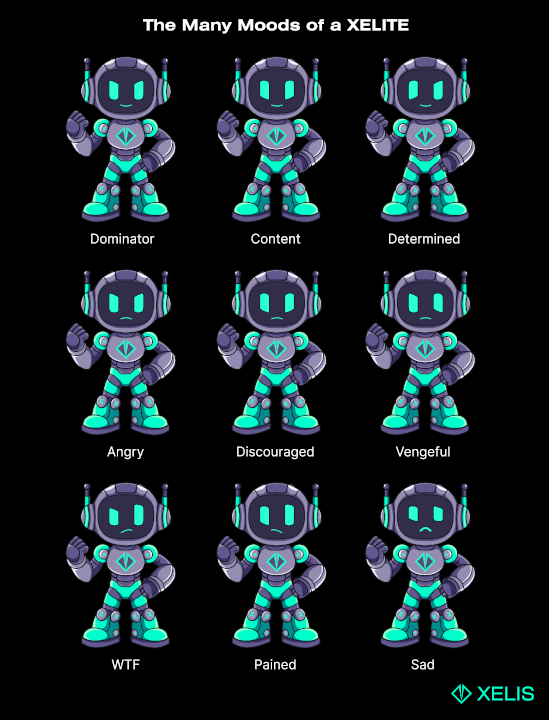
    Xelis mascot
    Xelite, Xelis mascot (Source: https://github.com/xelis-project/xelis-assets)

    Implications for Cryptocurrency Evolution

    The emergence of BlockDAG cryptocurrencies signals a maturing of the field. Bitcoin proved that decentralized digital currency is possible. Ethereum demonstrated that blockchains can be programmable. Monero showed that privacy is achievable. Now, projects like Kaspa and Xelis integrate these advances while addressing scalability limitations.

    This matters particularly for use cases requiring high throughput. Micropayments—small-value transactions like content tips or pay-per-use services—are economically infeasible on Bitcoin due to transaction fees [39]. Point-of-sale payments require instant confirmation and high throughput [40]. Decentralized finance applications need programmability, privacy, and scalability [41]. BlockDAG architectures make these applications practical.

    For populations in developing economies or under authoritarian regimes, these improvements are not merely conveniences. High transaction fees and slow confirmation times make Bitcoin impractical for small daily transactions—the very use case most important for the unbanked [42]. Privacy protections become critical when financial surveillance is a tool of political repression [43]. Programmable money enables decentralized alternatives to traditional financial services without requiring trust in institutions [44].

    Adoption and Network Effects

    The success of Kaspa and Xelis will ultimately depend not just on technical merit but on ecosystem development. Kaspa has seen growing mining adoption, with hash rate steadily increasing since launch [45]. Exchange listings have expanded, and developer activity continues building wallet software, explorers, and infrastructure tools [46].

    Xelis, being newer, faces a longer road to adoption. Its combination of features is technically impressive, but each added complexity—DAG, privacy, smart contracts—increases the difficulty of security auditing and the risk of undiscovered vulnerabilities [47]. The project will need time to prove its security properties in real-world conditions.

    Both projects benefit from being open-source, allowing independent verification and community contribution [48]. This transparency enables the trust-minimized systems that make cryptocurrency valuable. However, open-source development also means anyone can fork the code, creating potential fragmentation if communities disagree on protocol direction [49].

    Conclusion: Evolutionary Steps Forward

    Kaspa and Xelis represent not revolutionary replacements for Bitcoin but evolutionary refinements addressing known limitations. Kaspa demonstrates that blockchain’s security model can be preserved while achieving dramatically better scalability through DAG structures. Xelis shows that privacy and programmability can coexist without sacrificing performance.

    Neither project will make Bitcoin obsolete. Bitcoin’s network effects, security through age, and philosophical position as “digital gold” remain compelling [50]. But for applications requiring fast payments, complex smart contracts, or strong privacy, these newer protocols offer superior technical solutions.

    The cryptocurrency ecosystem benefits from this diversity. Different use cases favor different trade-offs between speed, privacy, programmability, and security [51]. Just as the internet runs on multiple protocols—HTTP for web, SMTP for email, FTP for files—cryptocurrency may evolve into a multi-protocol ecosystem where different ledgers serve different functions [52].

    For users seeking financial sovereignty, these technologies matter because they expand possibilities. A sanctions-hit nation might prioritize privacy (Xelis). A remittance corridor might prioritize speed and low fees (Kaspa). A savings vehicle might prioritize security and stability (Bitcoin). The existence of multiple robust alternatives strengthens the entire ecosystem against single points of failure—whether technical vulnerabilities or political attacks [53].

    BlockDAG represents one path forward for cryptocurrency scaling. Whether Kaspa and Xelis specifically succeed matters less than the proof that alternatives to linear blockchain can work at scale while maintaining security. This knowledge enables future innovations and ensures that cryptocurrency can continue evolving to meet real-world needs.


    References

    [1] Nakamoto, Satoshi (2008). “Bitcoin: A Peer-to-Peer Electronic Cash System.” bitcoin.org/bitcoin.pdf
    [2] Antonopoulos, Andreas M. (2017). Mastering Bitcoin. O’Reilly Media.
    [3] Bitcoin.org. “How Bitcoin Works.” bitcoin.org/en/how-it-works
    [4] Buterin, Vitalik (2014). “Ethereum White Paper.” ethereum.org/whitepaper
    [5] Narayanan, Arvind, et al. (2016). Bitcoin and Cryptocurrency Technologies. Princeton University Press.
    [6] Buterin, Vitalik (2017). “The Blockchain Trilemma.” GitHub.
    [7] Sompolinsky, Yonatan & Zohar, Aviv (2015). “Secure High-Rate Transaction Processing in Bitcoin.” Financial Cryptography 2015.
    [8] Popov, Serguei (2018). “The Tangle.” IOTA Foundation.
    [9] Sompolinsky, Y., Lewenberg, Y., & Zohar, A. (2016). “SPECTRE: A Fast and Scalable Cryptocurrency Protocol.” IACR Cryptology ePrint Archive.
    [10] Popov (2018). “The Tangle.”
    [11] Kusmierz, Bruno (2019). “Analysis of the IOTA Tangle.” IOTA Foundation.
    [12] Kaspa Documentation (2022). “GHOSTDAG Protocol.” kaspa.org/docs
    [13] Sompolinsky & Zohar (2015). “Secure High-Rate Transaction Processing.”
    [14] Kaspa.org. “Kaspa Technical Specifications.” kaspa.org
    [15] Kaspa Mining Guide (2023). kaspa.org/mining
    [16] Kaspa Emission Schedule (2022). kaspa.org/emission
    [17] Karame, Ghassan O., et al. (2012). “Double-Spending Fast Payments in Bitcoin.” ACM CCS 2012.
    [18] Kaspa Documentation (2022). “Instant Confirmations.”
    [19] Xelis White Paper (2024). xelis.io/whitepaper
    [20] Gentry, Craig (2009). “Fully Homomorphic Encryption Using Ideal Lattices.” STOC 2009.
    [21] Nakamoto (2008). Bitcoin whitepaper.
    [22] Reid, Fergal & Harrigan, Martin (2011). “An Analysis of Anonymity in the Bitcoin System.” Security and Privacy in Social Networks.
    [23] Van Saberhagen, Nicolas (2013). “CryptoNote v2.0.” cryptonote.org
    [24] Monero Project (2023). “What is Monero?” getmonero.org
    [25] Wood, Gavin (2014). “Ethereum: A Secure Decentralised Generalised Transaction Ledger.” ethereum.org/yellowpaper
    [26] Buterin (2014). Ethereum White Paper.
    [27] Atzei, Nicola, et al. (2017). “A Survey of Attacks on Ethereum Smart Contracts.” POST 2017.
    [28] Xelis Documentation (2024). “Homomorphic Encryption in Xelis.” xelis.io/docs
    [29] Xelis White Paper (2024). “Smart Contracts on Encrypted Data.”
    [30] Xelis Technical Blog (2024). “Combining Privacy and Programmability.” xelis.io/blog
    [31] Li, Chenxing, et al. (2018). “Scaling Nakamoto Consensus to Thousands of Transactions per Second.” arXiv:1805.03870
    [32] Sompolinsky, et al. (2016). “SPECTRE Protocol.”
    [33] Kaspa Research Papers (2022). “GHOSTDAG Security Analysis.” kaspa.org/research
    [34] Gentry (2009). “Fully Homomorphic Encryption.”
    [35] Xelis Security Audit (2024). “Third-Party Security Review.” xelis.io/security
    [36] Financial Action Task Force (2023). “Virtual Assets and Virtual Asset Service Providers.” fatf-gafi.org
    [37] Cambridge Centre for Alternative Finance (2023). “Cambridge Bitcoin Electricity Consumption Index.” cbeci.org
    [38] Gandal, Neil & Halaburda, Hanna (2014). “Competition in the Cryptocurrency Market.” Bank of Canada Working Paper.
    [39] Lightning Network White Paper (2016). “The Bitcoin Lightning Network.” lightning.network/lightning-network-paper.pdf
    [40] Nakamoto (2008). Bitcoin whitepaper, Section 8.
    [41] Schär, Fabian (2021). “Decentralized Finance: On Blockchain- and Smart Contract-Based Financial Markets.” Federal Reserve Bank of St. Louis Review.
    [42] World Bank (2021). “Global Findex Database.”
    [43] Kshetri, Nir & Voas, Jeffrey (2018). “Blockchain-Enabled E-Voting.” IEEE Software.
    [44] Tapscott & Tapscott (2016). Blockchain Revolution.
    [45] MiningPoolStats (2024). “Kaspa Network Hash Rate.” miningpoolstats.stream/kaspa
    [46] Kaspa GitHub (2024). github.com/kaspanet
    [47] Xelis Roadmap (2024). “Development and Audit Timeline.” xelis.io/roadmap
    [48] Open Source Initiative. “The Open Source Definition.” opensource.org/osd
    [49] De Filippi, Primavera & Loveluck, Benjamin (2016). “The Invisible Politics of Bitcoin.” Internet Policy Review.
    [50] Ammous, Saifedean (2018). The Bitcoin Standard. Wiley.
    [51] Narayanan, et al. (2016). Bitcoin and Cryptocurrency Technologies.
    [52] Tasca, Paolo & Tessone, Claudio J. (2019). “A Taxonomy of Blockchain Technologies.” Journal of The British Blockchain Association.
    [53] Böhme, Rainer, et al. (2015). “Bitcoin: Economics, Technology, and Governance.” Journal of Economic Perspectives.

  • Digital Sovereignty: How Free Software and Open Money Empower You

    Digital Sovereignty: How Free Software and Open Money Empower You

    (Not Financial Advise)

    Introduction

    In an increasingly digital world, the tools we use and the money we transact with determine who holds power over our lives. The choice between proprietary systems and open alternatives is not merely technical—it is political. Free software and open-source cryptocurrencies represent more than technological innovations; they are instruments of self-determination, offering pathways to autonomy for anyone refusing to accept corporate and governmental control as inevitable.

    The Power of Choice: Free Software as Resistance

    Free software—often confused with “free of cost” software—refers to programs that respect users’ freedom to run, study, modify, and distribute the code.[1] The Free Software Foundation, founded by Richard Stallman in 1985, established four essential freedoms: the freedom to run the program for any purpose, to study and modify it, to redistribute copies, and to distribute modified versions.[2] These freedoms transform users from passive consumers into active participants in their digital lives.

    This distinction matters for anyone who values autonomy. Proprietary software locks users into corporate ecosystems that extract data, impose surveillance, and maintain dependencies.[3] When a government or corporation can unilaterally shut off access to essential tools, the lack of control becomes a vulnerability that can be exploited.[4]

    This is not limited to authoritarian regimes. In 2013, Edward Snowden revealed that the US National Security Agency had compromised major proprietary software and hardware to enable mass surveillance of citizens worldwide.[5] In 2022, Canadian authorities used emergency powers to freeze bank accounts of citizens participating in trucker convoy protests—demonstrating that even Western democracies deploy financial control against dissent.[6] When financial platforms deplatform users based on political views, as seen in Operation Chokepoint targeting legal businesses the US government disfavored, centralized systems become tools of control regardless of geography.[7]

    Consider Venezuela, where hyperinflation and international sanctions have made traditional banking nearly impossible for ordinary citizens. Many Venezuelans turned to free software operating systems like Linux when Microsoft and other companies ceased support, and they adopted cryptocurrency when their national currency collapsed.[8] This was not ideology; it was survival. But the need for alternatives exists everywhere systems of control operate.

    Open Source: The Foundation of Trustless Systems

    Open-source software extends the principles of free software into collaborative development models where code transparency enables verification and trust.[9] This transparency becomes critical in financial systems. Bitcoin, the first cryptocurrency, is built entirely on open-source code—anyone can inspect, verify, and propose improvements to its protocol.[10]

    Free and open-source software logo
    Free and open-source software logo (Source: https://commons.wikimedia.org/wiki/File:Free_and_open-source_software_logo_(2009).svg)

    This openness prevents the hidden exploitations endemic to traditional finance. When code is proprietary, users must trust institutions to act in their interest—a trust repeatedly betrayed by banks, payment processors, and governments. Open-source systems replace institutional trust with mathematical verification, creating what cryptographers call “trustless” systems.[11]

    The implications are profound. According to the World Bank, approximately 1.4 billion adults remain unbanked globally, with the highest rates in sub-Saharan Africa and South Asia.[12] But financial exclusion affects populations everywhere: millions in the US and Europe lack bank accounts or rely on predatory check-cashing services.[13] Traditional banking requires infrastructure, documentation, and institutional access that systematically excludes not just the obviously poor, but also immigrants, minorities, political dissidents, and anyone deemed inconvenient by financial gatekeepers.

    Cryptocurrencies require only internet access and a device capable of running open-source wallet software—barriers that continue to fall as technology spreads.

    Bitcoin and Cryptocurrencies: Open Money for Open Societies

    Bitcoin emerged in 2009 as a response to the 2008 financial crisis, designed as peer-to-peer electronic cash that operates without central authorities.[14] Its creator, known only as Satoshi Nakamoto, explicitly designed it as an alternative to the traditional banking system that had just demonstrated its fragility and corruption.[15]

    Bitcoin logo
    Bitcoin logo (Source: https://commons.wikimedia.org/wiki/File:Bitcoin_logo_clean.svg)

    The cryptocurrency’s open-source nature means no single entity controls it. Unlike fiat currencies, which governments can print at will, Bitcoin’s supply is mathematically limited to 21 million coins.[16] For populations facing hyperinflation—from Zimbabwe to Lebanon to Argentina, but also for savers in the US and Europe watching their purchasing power erode through quantitative easing—this scarcity offers protection against monetary debasement.

    More importantly, Bitcoin transactions cannot be censored or reversed by third parties. When WikiLeaks was cut off from Visa, Mastercard, and PayPal in 2010 following US government pressure, Bitcoin donations continued flowing.[17] When Nigerian protesters found their bank accounts frozen during the #EndSARS movement in 2020, they turned to Bitcoin to continue funding their resistance.[18] When Canadian authorities froze bank accounts of trucker convoy participants and donors in 2022, cryptocurrency offered a censorship-resistant alternative.[19] When Russian citizens faced international sanctions in 2022, many preserved their wealth through cryptocurrency.[20]

    These are not hypothetical benefits. They represent real people using open-source tools to circumvent systems designed to control them—systems that exist in Ottawa and Washington as much as in Lagos or Moscow.

    The CBDC Threat: Programmable Money, Programmable Control

    Even as decentralized cryptocurrencies offer alternatives to traditional finance, governments worldwide are developing Central Bank Digital Currencies (CBDCs)—digital versions of national currencies that centralize control rather than distribute it.[21]

    For Example: China’s digital yuan, already deployed in pilot programs. The system enables real-time transaction monitoring, programmable expiry dates forcing spending rather than saving, and the ability to freeze accounts remotely.[22] Transactions can be restricted by location, vendor type, or political criteria—creating a social credit system embedded in money itself.[23] The European Central Bank is advancing its digital euro project, with implementation planned by 2028.[24] The US Federal Reserve has published research on a digital dollar.[25] The Bank of England is exploring “programmable money” that could restrict how citizens spend.[26]

    Digital Euro
    Digital Euro (Source: pixabay.com/illustrations/coin-digital-currency-digital-9165491/)

    These systems promise efficiency and financial inclusion, but the architecture enables unprecedented surveillance and control. Unlike physical cash, which offers anonymity and cannot be remotely seized, CBDCs create permanent records of every transaction and enable instant account freezing.[27] Combined with artificial intelligence, this infrastructure could enable automated enforcement of arbitrary rules—blocking purchases of disfavored products, implementing negative interest rates to force spending, or cutting off financial access for dissidents.[28]

    The contrast with open-source cryptocurrency is stark. Bitcoin operates without central control, surveillance, or the ability to freeze accounts. CBDCs represent the opposite: maximum centralization of monetary power in government hands. As governments push CBDCs, the case for decentralized alternatives becomes more urgent—not just for populations under obviously authoritarian regimes, but for anyone who values financial freedom.

    The Choice of Where Power Flows

    Every software purchase and every currency transaction represents a choice about who holds power. Using Microsoft Windows or Apple’s iOS means accepting that a corporation in California or Washington can remotely access, modify, or disable your device.[29] Using the US dollar or euro means accepting that governments can freeze your accounts, track your transactions, and devalue your savings through monetary policy.

    These are not abstract concerns affecting only distant populations. Palestinians in Gaza have found their financial access repeatedly restricted by Israeli controls over banking systems.[30] Afghan women saw their bank accounts frozen when the Taliban returned to power.[31] Canadian truckers and their supporters experienced account freezes in 2022.[32] US citizens face civil asset forfeiture, where police can seize money without criminal charges.[33] Anyone can become a target when centralized systems decide who deserves access.

    In each case, dependence on centralized, proprietary systems became a vulnerability that could be exploited. In contrast, decentralized open-source alternatives offer resilience. A Linux computer cannot be remotely disabled by Microsoft. A Bitcoin wallet cannot be frozen by a government—though the on-ramps and off-ramps to traditional currency can be controlled, the Bitcoin itself remains in the holder’s possession.[34]

    The Discipline of Non-Compliance

    Yet awareness alone changes nothing. The tools of empowerment already exist; the challenge is adoption. This requires what might be called the “discipline of non-compliance”—the conscious, sustained choice to stop feeding systems that exploit or oppress.

    This discipline is not costless. Proprietary software is often more polished, better marketed, and easier to use. The network effects of popular platforms create genuine value in participation. Moving to free software or cryptocurrency requires learning curves, occasional frustrations, and acceptance of fewer features or conveniences.

    But the costs of compliance are greater. Every person who chooses WhatsApp over Signal feeds Meta’s surveillance apparatus.[35] Every transaction through traditional banking reinforces the power of financial institutions to exclude and control. Every Windows license purchased strengthens Microsoft’s ability to dictate terms to users worldwide.

    For individuals, the path to empowerment requires rejecting convenience when it comes at the cost of freedom. For communities, it requires building parallel infrastructures—local mesh networks running on open-source firmware, community cryptocurrency education programs, mutual aid networks that operate outside traditional financial surveillance.[36]

    Beyond Individual Choice: Systemic Alternatives

    The most powerful application of these technologies emerges when communities adopt them collectively. In Cuba, where internet censorship is severe and economic sanctions limit access to international services, activists have developed networks of cryptocurrency users who help each other navigate restrictions.[37] In the favelas of Brazil, community-managed mesh networks running Linux provide internet access independent of ISP control.[38] In the United States, privacy-focused communities run Tor nodes, develop encrypted communication tools, and build Bitcoin circular economies to reduce dependence on surveilled financial systems.[39]

    These are not utopian fantasies but functioning realities, often born from necessity rather than ideology. They demonstrate that alternatives to corporate and state control are not only possible but already operational—and they scale.

    Conclusion: Freedom Requires Execution

    The tools of digital sovereignty—free software, open-source cryptocurrencies, decentralized networks—exist and are accessible. Their adoption does not require permission from institutions or governments. It requires only the decision to use them and the discipline to persist when obstacles arise.

    For anyone facing corporate exploitation, financial surveillance, or arbitrary control—whether in Lagos, Ottawa, Caracas, or London—these technologies offer more than alternatives; they offer autonomy. But that autonomy must be claimed through action. Awareness without execution changes nothing. The choice of who to give power to—through software, through currency, through infrastructure—remains in individual hands.

    The question is no longer whether liberation is possible. It is whether you possess the discipline to choose it.


    References

    [1] Free Software Foundation. “What is Free Software?”

    [2] Stallman, Richard M. (2002). Free Software, Free Society: Selected Essays. GNU Press.

    [3] Zuboff, Shoshana (2019). The Age of Surveillance Capitalism. PublicAffairs.

    [4] Electronic Frontier Foundation (2019). “How U.S. Export Controls Can Restrict Access to Security Research and Technologies.”

    [5] Greenwald, Glenn (2014). No Place to Hide: Edward Snowden, the NSA, and the U.S. Surveillance State. Metropolitan Books.

    [6] CBC News (2022). “Trudeau invokes Emergencies Act to freeze convoy protesters’ bank accounts.”

    [7] U.S. House of Representatives (2014). “The Department of Justice’s ‘Operation Choke Point.’”

    [8] The Guardian (2019). “Venezuela: how a rich country collapsed.”

    [9] Raymond, Eric S. (1999). The Cathedral and the Bazaar. O’Reilly Media.

    [10] Nakamoto, Satoshi (2008). “Bitcoin: A Peer-to-Peer Electronic Cash System.”

    [11] Antonopoulos, Andreas M. (2017). Mastering Bitcoin: Programming the Open Blockchain. O’Reilly Media.

    [12] World Bank (2021). “The Global Findex Database 2021.”

    [13] Federal Reserve (2022). “Economic Well-Being of U.S. Households.”

    [14] Nakamoto (2008). Bitcoin whitepaper.

    [15] Vigna, Paul & Casey, Michael J. (2015). The Age of Cryptocurrency. St. Martin’s Press.

    [16] Antonopoulos (2017). Mastering Bitcoin.

    [17] Forbes (2011). “Bitcoin Prevents Monetary Censorship.”

    [18] Quartz Africa (2020). “#EndSARS: Nigerian protesters turn to Bitcoin.”

    [19] CoinDesk (2022). “Canadian Trucker Convoy Turns to Bitcoin After GoFundMe, Banks Freeze Funds.”

    [20] Reuters (2022). “Russians turn to crypto to shield assets from sanctions.”

    [21] Bank for International Settlements (2023). “Central Bank Digital Currencies: System Design and Interoperability.”

    [22] The Wall Street Journal (2022). “China Creates Its Own Digital Currency.”

    [23] Chorzempa, Martin (2021). “China’s Digital Yuan: An Economic and Financial Game Changer?” Peterson Institute.

    [24] European Central Bank (2023). “The Digital Euro Project.”

    [25] Federal Reserve (2022). “Money and Payments: The U.S. Dollar in the Age of Digital Transformation.”

    [26] Bank of England (2023). “The Digital Pound: Consultation Paper.”

    [27] Agustín Carstens, BIS (2021). “CBDCs: an opportunity for the monetary system.”

    [28] Prasad, Eswar (2021). The Future of Money: How the Digital Revolution Is Transforming Currencies and Finance. Harvard University Press.

    [29] Schneier, Bruce (2015). Data and Goliath: The Hidden Battles to Capture Your Data. W.W. Norton.

    [30] Al Jazeera (2021). “Palestinians struggle as Israel controls their banking.”

    [31] The New York Times (2021). “Afghan Women Lose Access to Bank Accounts Under Taliban.”

    [32] CBC News (2022). “Emergencies Act and bank account freezes.”

    [33] The Washington Post (2020). “Civil asset forfeiture has taken billions of dollars from Americans.”

    [34] Tapscott, Don & Tapscott, Alex (2016). Blockchain Revolution. Portfolio.

    [35] Zuboff (2019). Surveillance Capitalism.

    [36] Bauwens, Michel & Kostakis, Vasilis (2014). Network Society and Future Scenarios for a Collaborative Economy. Palgrave Macmillan.

    [37] CoinDesk (2020). “How Cubans Are Using Bitcoin.”

    [38] Wired (2018). “Inside Brazil’s DIY Internet Rebellion.”

    [39] Tor Project (2023). “Tor Metrics.”